GM and LG bring back 700 Tennessee workers to make batteries for AI
Published in Business News
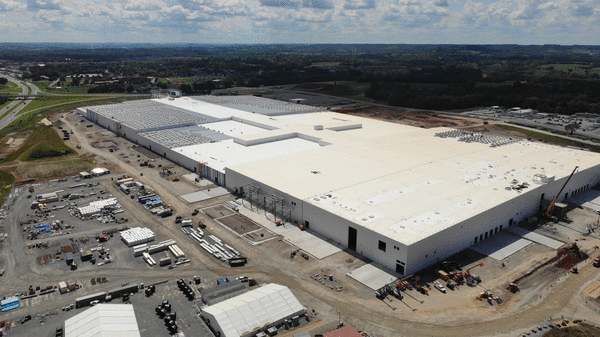
About 700 workers temporarily laid off at a Tennessee factory owned by General Motors Co. and LG Energy Solution will return to build batteries for data centers instead of electric vehicles, the companies said Tuesday.
Ultium Cells, a partnership between GM and LGES, furloughed the workers in January at its Spring Hill, Tennessee, plant after federal tax credits for EV buyers and lessees ended and demand for electrified vehicles dropped. Ultium Cells said last July it planned to produce lithium-iron-phosphate cells for EVs starting in 2027.
Ultium is retraining those workers to make batteries that support the growing AI industry amid retrenchment by GM and other automakers on electric vehicle production.
Furloughed employees "are in the process of returning to work to support the launch of the new product line," according to a press release from Ultium. Production is set to begin in the next three months.
“Spring Hill is becoming a key hub in our North American ESS manufacturing footprint which has helped offset slower than expected EV demand,” said Bob Lee, president of LG Energy Solution North America, in a statement. “The explosive growth in energy storage diversifies our customer base and product portfolio and provides tangible benefits to American competitiveness in this decade and beyond.”
Ultium sunk $70 million into retooling Spring Hill to make energy storage batteries that use a lithium-iron-phosphate formula, according to the company. The chemistry is cheaper but heavy, making it more useful for stationary energy storage than in vehicles.
“This announcement marks Ultium Cells’ first major retooling of the Spring Hill process equipment and reflects the company’s continued evolution as a diversified battery cell manufacturer,” said Injae Pahk, president/CEO of Ultium Cells. “By evolving production to meet changing market demands, Ultium Cells is reinforcing its long-term position as a key employer and technology leader in the U.S. battery cell sector.”
LGES makes energy storage batteries at its Holland plant in west Michigan, as well as in Windsor, Ontario, in a facility it formerly operated in a joint venture with Stellantis NV.
Ultium Cells' production of EV batteries made with nickel-cobalt-manganese-aluminum chemistry — which is more expensive but allows EVs to keep a charge longer — is moving from Spring Hill to Ultium Cells' plant in Warren, Ohio.
Data centers need a steady supply of energy to power warehouses of computers and keep the machines cool, and available energy from power grids fluctuates depending on daily residential and commercial usage.
Batteries store excess energy produced during low-demand times for use during peak demand periods, either to support the grid or data centers.
©2026 www.detroitnews.com. Visit at detroitnews.com. Distributed by Tribune Content Agency, LLC.










Comments