Worst US stock rout since 2020 leaves virtually nowhere to hide
Published in Business News
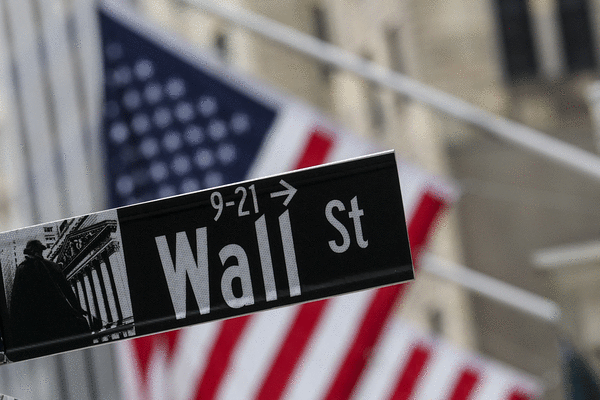
The fears had shadowed Wall Street off and on for months. Then, all at once, everyone rushed for the exits.
The stock-market rout on Thursday, which began soon after the opening bell on the New York Stock Exchange, worsened as the day wore on, pulling down everything from high-flying chipmakers like Nvidia Corp. to defensive fallbacks like Walmart Inc.
But hardest hit were the companies at the heart of the artificial-intelligence boom that earlier this year sent the stock market to one record high after another — and sowed worries that it was a bubble bound to burst.
All it took to send them tumbling on Thursday was the prospect that Democrats’ sweeping victory in the Congressional elections may herald a political shift that will tap the brakes on the industry’s breakneck growth and the hundreds of billions of dollars being plowed into the computer equipment that powers it.
By the time the session came to a close, the Nasdaq 100 Index was down over 6%, its worst drop since the height of the tailspin unleashed by Covid-19 in March 2020.
Nvidia Corp., the world’s most valuable company, tumbled over 9% in its deepest slide since January 2025, erasing the last of this year’s gains. All 30 companies in the Dow Jones Industrial Average fell, the S&P 500 lost 4.4% and a closely watched index of semiconductor shares dropped 12% for its worst day since the start of the pandemic. As rumors swirled of hedge funds dumping positions, an ETF that piles into so-called momentum trades had one of its worst days in over a decade and investors rushed into Treasuries as a haven.
“I’m getting flashbacks to 2008 or 2001,” said Greg Taylor, chief investment officer at PenderFund Capital Management, referring the collapse of the Internet and housing bubbles. “It’s so focused on one theme and the unwind of that theme. I think it’s something that needed to happen as we have too much focus on AI and it became too big a part of the market.”
The selloff capped a dizzying two days on Wall Street since voters delivered a stinging rebuke to President Donald Trump and his Republican Party, fueled by anger over high gas prices and angst about the impacts of AI and the data centers in places like Texas that are sprouting up to power it.
The initial reaction drove stocks higher on Wednesday, with investors wagering a politically divided Washington would provide a check on Trump’s power and hasten the end of a war in Iran that rekindled inflation and sent interest rates higher.
But the dip buyers were burned when the pendulum swung back and the focus shifted to potential cracks in the AI boom that’s been playing an outsize role in the economy.
“They did jump the gun,” said Michael O’Rourke, chief market strategist at JonesTrading Institutional Services LLC. “You have these earnings forecasts for next year that make these stocks look like they have low PEs. But if you are having this policy change, that’s a structural shift in what the environment is going to be for the data center build out. The forecasts are no longer valid.”
The Nasdaq 100 fell further into a correction, erasing $2.3 trillion in market value and leaving it down nearly 15% from its Oct. 6 record.
For the first time since late July, traders are paying more for protection against short-term gyrations in the Invesco QQQ Trust Series 1 Exchange Traded Fund (QQQ) than for long-term swings relative to the SPDR S&P 500 ETF Trust, or SPY over the next three months — a sign of confusion about where stocks are headed.
“As someone who loves selloffs, I’m being a little bit more circumspect,” said Marta Norton, chief investment strategist at Empower. She said she’s sticking only to “companies that are incredibly healthy and look cheap on a lot of traditional metrics.”
The rapid reversal pummeled an exchange-traded fund that employs a momentum-trading strategy of chasing gains in the market’s winning stocks. That can become painful on days like Thursday, when the tactic backfired, sending the iShares MSCI USA Momentum Factor ETF down 8.2%, its worst day since 2020.
Michael Monaghan, partner and portfolio manager at Founder ETFs, said many smaller hedge funds, or “pod shops,” which often follow similar strategies, are exaggerating the selling pressure by being forced to unwind positions and other buyers are wary of stepping in.
“What we’ve got is a combination of a buyer’s strike where the big long-only funds that nibbled on stuff aren’t doing that and the pod shops are blowing out every position,” he said.
The Philadelphia Semiconductor Index (SOX), home to chip bellwethers like Nvidia Corp., Intel Corp. and Advanced Micro Devices Inc., tumbled 12% for its worst day since March 2020. That leaves the benchmark in a bear market, down more than 38% from its June 22 peak.
The companies, which have been benefitting from the spending on AI equipment, are among the most exposed to a potential pullback, given how high their valuations.
The Cboe Volatility Index, or VIX, a gauge of implied price swings in the S&P 500 known as the VIX, surged 11.57 points to close at 28.18, the highest since March. A gauge of expected volatility in the VIX posted the biggest one-day point advance since 2018, when the flood of speculative investment into short VIX products sparked a spike in volatility known as “Volmageddon.”
Moreover, the gap between the spot price and the level of three-month futures widened to its biggest since April 2025. That’s typically a signal of heightened investor fears and a harbinger of deeper declines.
The downturn amplified the pressure on what are seen as some of the market’s riskiest stocks. A Goldman Sachs Group Inc. basket of most shorted companies sank nearly 8%. Meantime, a basket of unprofitable tech companies, which includes firms like Roku Inc. and Peloton Interactive Inc., dropped 7.7% — its worst day since early June.
Companies with the most fragile balance sheets and higher debt loads tumbled about 4%, their worst session since April 2025, according to data compiled by Goldman Sachs and Bloomberg.
The Russell 2000 Index, which includes smaller companies that are often burdened by higher interest costs, dropped about 4.5%, pushing it into a correction.
Eric Diton, president and managing director at The Wealth Alliance, which was already trimming its exposure to AI shares, said the pushback against data centers could have an impact on earnings. He said he’s taking a cautious stance, given the sharp shift in sentiment, and has been snapping up energy shares as a hedge against elevated oil prices.
“This selloff is extreme,” he said. But, he added, he “can’t be as bullish as a few days ago.”
©2026 Bloomberg L.P. Visit bloomberg.com. Distributed by Tribune Content Agency, LLC.









Comments