After Iran and Venezuela, Florida's Cubans call for US military action
Published in News & Features
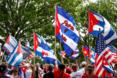
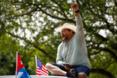
TAMPA, Fla. — Norberto Ferret spends long hours behind the wheel, driving across Florida. On Sunday, the 55-year-old commercial driver took a break from his job to join hundreds of others in Tampa to protest the Cuban regime.
“We have waited too long for our people to achieve their freedom,” said Ferret, who lives in Brandon. “We want change to come now.”
Demonstrators at Al Lopez Park and along Dale Mabry Highway in Tampa carried Cuban and American flags and megaphones and talked about repression in Cuba and the need to free the island. Attendees sang the Cuban national anthem and chanted in Spanish “¡Viva Cuba Libre!" (“Long live free Cuba!”) and “Intervención!” (“Intervention!”).
The protest came about a week after a similar demonstration in Miami, amid growing calls from Cuban exiles in Florida for the U.S. military to follow its incursions into Venezuela and Iran with one in Cuba to end 67 years of communist rule.
The fall of Nicolás Maduro in January changed the landscape in Venezuela and left Cuba without one of its main allies, intensifying the debate over the island’s future.
Yariel Hernandez of Tampa said a military intervention on the island is not only the most appropriate option but also a matter of national security. Hernandez, 29, crossed the U.S.-Mexico border legally in 2021, fleeing the “Castro-communist dictatorship.”
“If we talk about an intervention on the island, it has to be something more severe and precise, something that removes all the Castros from power,” Hernandez said. “No one should remain.”
Florida is home to about 1.6 million residents of Cuban origin, representing about 7% of the state’s population, according to the U.S. Census Bureau. The vast majority have historically identified with the Republican Party, which has been less open to engagement with the island.
Tougher immigration rules under the Trump administration are making it harder for many Cubans fleeing their country to achieve permanent legal status in the U.S. However, when the debate about Cuba’s future grows, differences over immigration policy are set aside.
Lázaro Ríos of Town ‘N Country is a Cuban doctor who came to the United States in 2023. He said he lived through the economic crisis, food shortages and rising prices on the island five years ago. He said the Trump administration should begin “cleaning the house” on the island by removing Cuban President Miguel Díaz-Canel from power.
“Let’s talk about a total regime change because with those people, there can be no negotiation,” Ríos said.
Trump has promised imminent action against the Cuban regime. He initially imposed an energy blockade and threatened any country or government that sells or supplies oil to Cuba.
Those sanctions have worsened the island’s internal problems and led to nationwide blackouts. Hospitals have drastically limited their services. Public transportation has been paralyzed. Many economic and educational activities have come to a halt.
Earlier this week, the U.S. allowed a Russian oil tanker, Anatoly Kolodkin, to arrive at the Cuban port of Matanzas to deliver relief in the form of approximately 730,000 barrels of oil. The United States would evaluate oil shipments to Cuba on a “case-by-case basis,” according to White House press secretary Karoline Leavitt. But Trump downplayed the shipment.
“Cuba is finished. They have a bad regime,” Trump said. “They have very bad and corrupt leadership, and whether or not they get a boat of oil, it’s not going to matter.”
Tensions between the United States and Cuba escalated over a month ago after a shootout between 10 men aboard a Florida-registered boat and Cuban authorities. Four dissidents, including two from Tampa Bay, were killed in the incident off the northern coast of the island nation.
Yaumara Rodríguez, a graphic design student in Tampa, said incidents like the boat clash reflect the level of tension. The war in Iran, which shows few signs of progress, is now the priority for the United States, she said.
“We all want to see a free Cuba forever, it’s our dream as Cubans,” said Rodríguez, 24. “But at what human cost?”
Ferret, the Brandon trucker, understood the concerns of Cuban families — repression, abuse, persecution, detention. But he said toppling a dictatorship of more than six decades involves major challenges.
Ferret arrived in the United States in 1997, years after his father came during the Mariel boatlift in the mid-1980s, an exodus that brought about 125,000 Cuban refugees to Florida.
For a long time, Ferret was a Democrat and supported easing trade sanctions as a path toward democratization in Cuba. After years of progress and setbacks, he said Trump’s return spurred a shift in his political stance.
“We cannot do this alone,” Ferret said. “We need help.”
Carmen Acosta, 70, of Plant City, was also in the crowd Sunday. Acosta came to Florida 17 years ago when her son sponsored her immigration. She wondered how people could help Cubans on the other side of the Florida Straits. Her eyes filled with tears.
“I wish there were a way without so much pain,” she said.
_____
©2026 Tampa Bay Times. Visit tampabay.com. Distributed by Tribune Content Agency, LLC.






Comments