Burnham says UK budget not what he would want in ideal world
Published in News & Features
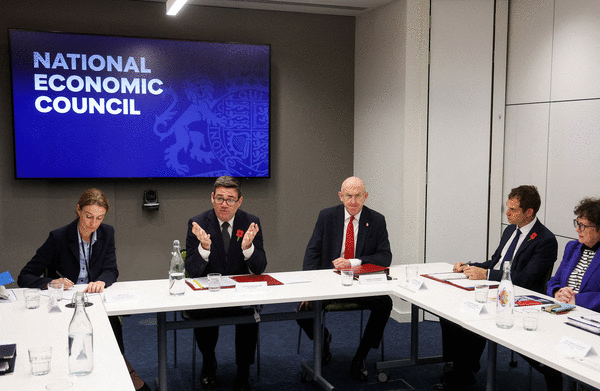
U.K. Prime Minister Andy Burnham said his chancellor’s budget this week was not what he’d want in an “ideal world,” after it was criticized by economists, political opponents and some within Labour as failing to grasp the moment.
John Healey on Wednesday delivered the Burnham administration’s first budget, majoring on small measures — 98 in all — and shying away from large-scale tax-and-spend moves of the kind taken by his predecessor, Rachel Reeves. Defending the budget, Burnham told ITV in a clip released Friday that “the room for maneuver wasn’t what I would have hoped.”
“The volatility of things means you just can’t necessarily deliver the budget in an ideal world you would want,” Burnham said, referring to the global geopolitical uncertainty. “We’ve steered a course through very difficult times.”
Burnham is trying to stave off criticisms from a broad spectrum of groups that despite coming to power on a promise of delivering radical change, the first big fiscal set-piece of his government did little to solve the U.K.’s problems. It comes against a backdrop of the conflict in Iran, which has pushed up energy prices, spurring wider inflation and raising government borrowing costs.
Mainstream, the left-wing Labour faction which backed Burnham’s leadership push earlier this year, lamented “missed opportunities” and said the budget’s “everyday fixes do not represent a substantive change.” Resolution Foundation Chief Executive Ruth Curtice said Healey’s statement amounted to a “scatter-gun Budget that did little to address the sharp challenges facing Britain,” while Rain Newton-Smith, chief executive of the CBI business lobby, said the set-piece lacked the “bold moves” needed to spur on British companies.
Key measures in Healey’s budget included a promise to give about 20 million households a one-time £100 ($134) payment to help with energy bills, a target to raise defense spending to 3% of GDP by 2030 from about 2.6% this year, and an increase in the surcharge levied on banks over and above corporation tax.
There was some respite for Burnham when YouGov published polling late on Thursday showing that Healey’s steady approach had gone down well with voters. YouGov said 45% of Britons saw the budget as fair compared to 20% who did not, the most positive review for a budget since March 2021.
However 74% still thought the U.K. economy was in a bad state, and while the proportion who think the government is managing the economy well has doubled to 31% over the past year, 55% still think they are doing badly.
In the aftermath of the budget, Healey introduced confusion around Labour’s plans for welfare, with the benefits bill forecast to balloon over coming years.
Asked if he wanted to see the bill cut before the next election, which is due in August 2029 at the latest, Healey told the BBC “there will be cuts in welfare before the election,” which is due by mid-August 2029. The broadcaster later cited Treasury officials saying this was not a promise, and then Healey told Channel 4 on Thursday that “it’s not correct to say that we’re going to bring this welfare bill down in this Parliament because we’ve not set a timetable for that.”
Burnham told ITV he wanted to avoid “brutal cuts” in welfare payments because that would “leave people in absolute crisis and then they will be going into other services in a chaotic way.”
The government is currently awaiting two reports due next month which will give recommendations for the welfare system and getting younger people into work.
Defence Secretary Wes Streeting attempted to further clarify the government’s position on welfare on Friday morning, saying the current trajectory for spending was “not sustainable.”
“Off the back of those important pieces of work, we’ll be able to set out plans to reform welfare, bring the bill down over time,” Streeting told Sky on Friday. “What the chancellor is not able to do at this stage is to set out deadlines and targets because we haven’t seen that work yet.”
Later on Friday, Burnham addressed regional leaders of Scotland, Wales and Northern Ireland at a meeting in Glasgow. He told them he wanted to work with the devolved administrations “in a more collaborative way” than in the past, reiterated his goal of delivering “good growth in every postcode,” and said there was a “need for industrial transition all over the U.K.”
—With assistance from Joe Mayes.
©2026 Bloomberg L.P. Visit bloomberg.com. Distributed by Tribune Content Agency, LLC.





Comments