El Niño storms bring flooding and golf-ball hail to Southwest
Published in News & Features
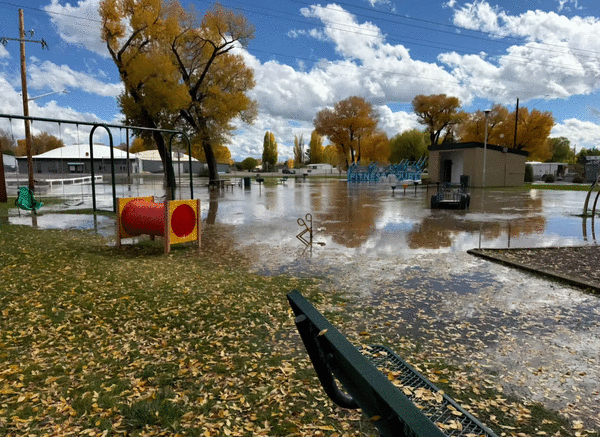
The latest in an unrelenting run of severe rainstorms is pushing its way into the Southwest this weekend, following deadly floods that have transformed some neighborhoods into hazmat zones requiring costly cleanups.
Traditionally, the heaviest rains associated with an El Niño phenomenon arrive in the U.S. during the winter months. But warming oceans and an ongoing parade of tropical storms and hurricanes enhanced by El Niño have sent moisture pouring into the Southwest since September. Monthly rainfall records have been threatened in parts of Arizona and New Mexico.
Starting late Saturday, a severe “atmospheric river” storm packing tropical moisture may drop more than 4 inches (10.2 centimeters) in some areas. “Our main concern is just how saturated soils are already,” said Joshua Schank, lead forecaster for the National Weather Service office serving Flagstaff, Arizona. “It can’t hold the moisture it’s already had to contend with over the last three to four weeks.”
The rainfall has been especially intense in the Four Corners, the area where Arizona, Utah, Colorado and New Mexico meet. A spate of storms that kicked off Oct. 20 caused catastrophic flooding along the San Juan River that weaves through the region. Raw sewage washed into the waterway, which overtopped its banks and inundated communities on the Navajo Nation reservation and rural parts of New Mexico.
At least two people were found dead after the rains receded. A week later, some residents were still unable to return home. “With current hazmat concerns and potential for more rainfall soon, re-entry remains hazardous,” officials in San Juan County, New Mexico, said in a safety bulletin Friday.
There has been little time for rivers and streams to bounce back between storms. The Southwest may see a brief reprieve from rain early next week, Schank said, but chances will build again heading into next weekend.
Though destructive and deadly, the storms have also brought much-needed snow at higher elevations — a foundation for the Southwest’s snowpack and water supplies in the months ahead. El Niño is expected to further boost the odds of wet weather as it peaks in strength later this winter.
Drought forecasters have cautioned that a single, extra-snowy winter would not be enough to fully restore the region's reservoirs. But extra rain and snow may help soften the contours of the intense, multiyear drought that’s settled over the Southwest, said New Mexico State Climatologist Dave DuBois.
Dry conditions have imperiled the Rio Grande River and the Colorado River, which is a source of water for more than 40 million people in seven states and the engine behind roughly $1 trillion in economic activity. “It all benefits the environment and ecosystem, but in terms of water use for agriculture, it really helps to have a good, wet fall,” DuBois said. He added, “but not too much.”
Storms have unleashed havoc in flood-prone communities. Since September, emergency crews have conducted hundreds of water rescues in neighborhoods cut off by floodwaters. Some towns have launched intensive cleanup efforts. Infrastructure — from drainage and sidewalks to roads and bridges — will need repairs.
In New Mexico alone, officials have said recovery costs may exceed $200 million. “Our road crews cleared debris around the clock, and our counties and tribal nations spent money they don’t have to keep people safe,” Democratic Governor Michelle Lujan Grisham said in a statement Thursday, adding that the state planned to seek funding from “federal partners” to defray costs.
While the Federal Emergency Management Agency, or FEMA, can help reimburse some expenses, larger outlays require a major disaster declaration from President Donald Trump. So far, Trump has only approved limited aid to put toward emergency response in New Mexico. Other southwestern states have yet to publicly request aid.
White House spokesperson Lauren Bis said FEMA and other federal agencies have been "on the ground in affected areas" to provide water, technical assistance and support with incident management, infrastructure site assessments and communications, among other needs.
In the meantime, unstable storm systems continue to pour in from the Pacific. Some have dropped golf-ball sized hail, DuBois said. Rare tornadoes have touched down in Arizona and western New Mexico, including the mostly arid city of Santa Fe. “Moisture doesn’t usually go as far west,” DuBois said. “It’s pretty extraordinary.”
———
(With assistance from Brian K Sullivan and Julia Amann.)
©2026 Bloomberg L.P. Visit bloomberg.com. Distributed by Tribune Content Agency, LLC.






Comments