Trump expands Cuba sanctions, targeting new industries and offshore network
Published in News & Features
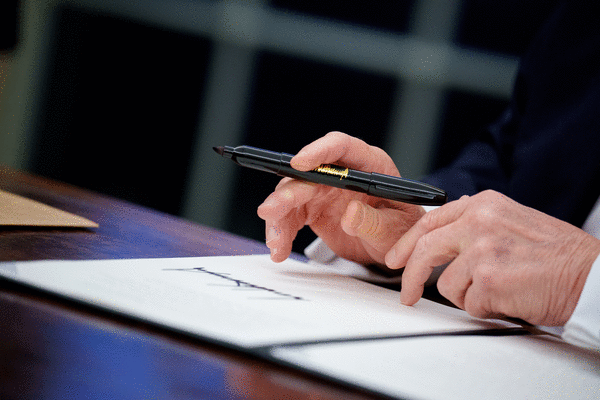
The Trump administration on Thursday extended its sanctions on Cuba to the island’s electronics, manufacturing, marine and technology sectors and punished Guillermo Faustino Rodríguez López-Calleja, a shadowy figure involved in the offshore companies that have helped Cuba get around U.S. sanctions.
An executive order President Donald Trump signed May 1 authorized sanctions to Cuban and foreign businesses operating in the energy, defense, metals and mining, financial services and security sectors of the island's economy, and allowed the Treasury Department to add others.
The administration’s decision to widen the sectors under sanction took effect Thursday. Any foreign person or businesses found to operate or to have operated in those sectors “shall be subject to sanctions,” a State Department fact-sheet says.
Several foreign firms operate in those sectors. They include Anglo-Dutch company Unilever, which holds 60% of a personal care products venture at the Mariel Special Development Zone, and Italy’s GIB Holding, owner of the dairy maker Lácteos Mariel. Chinese firms Huawei and ZTE have supplied the state telecom monopoly ETECSA; Haier is the technology partner of a Cuban laptop plant and China Communications Construction won a contract to modernize the Port of Santiago de Cuba.
The State Department also issued sanctions to eight entities and two people on Thursday, as well as five oil tankers in what it called part of a push to end the Cuban government’s “malign activities, both in Cuba and across our hemisphere.” All nine were added to a Treasury blacklist named Specially Designated Nationals and Blocked Persons List. Treasury freezes U.S. assets of those in the list and prohibits U.S. entities to transact with them.
The State Department described Rodríguez López-Calleja as part of an extensive network of shipping companies moving petroleum products to and from Cuba. The list also includes Caroil Transport Marine, a Cyprus-based company that manages Cuban-flagged crude oil tankers and that were first sanctioned in 2019 by the Treasury Department, and Tentacool Commercial, a Panama-based company that owns the tanker Gloria C.
Two companies based in Cuba were also named: Internacional Marítima, owner of the tanker Esperanza; and Petróleos Marítimos del Caribe, or Petromarca, which manages and operates two Cuban-flagged tankers that carry petroleum products. The sanctions also cover the tankers Maria Cristina, Emilia and Lourdes.
State also sanctioned Any Rodríguez Lastres, the daughter of Gen. Ania Guillermina Lastres Morera, president of the military conglomerate GAESA, who was already under sanctions. Rodríguez Lastres once served as commercial director of the Mariel container terminal, which is also sanctioned, State said.
Two more Cuban state companies joined the list. Cubaelectrónica imports supplies and equipment for the island’s electronics industry, and Tecnosime carries out commercial, labor and promotional activities that bring in revenue for the government, according to State.
Washington also went after two Chinese suppliers. State said China National Electronic Import and Export Company, or CEIEC, contracted this year with the Cuban arms buyer Sociedad Mercantil Duna to export components for equipment used by Cuba’s armed forces. Beijing H&C Technologies, which sells surveillance and security equipment, worked with Duna to export military equipment to Cuba this year, State said. Treasury sanctioned CEIEC in 2020 over its support for the Maduro government in Venezuela.
“The Trump Administration will not stand by while the Cuban regime funnels the island’s resources to its military elite, while regime insiders and their family members profit from opaque offshore networks, and while Cuba continues to serve as a staging ground for a global coalition of hostile anti-American actors to threaten, spy on, and plot against the United States and its interests,” Secretary of State Marco Rubio said in a statement.
Rubio said Cuba’s “ruling elite is hoarding the island’s energy, shipping, and technology resources for its own enrichment, leaving the Cuban people to contend with blackouts, shortages, and a stagnant economy.” He said Havana relies on a web of state-owned enterprises, joint ventures and offshore intermediaries to keep that system running.
The man behind the offshore network
The sanctions reach a figure the Miami Herald has described as a phantom in Cuba’s offshore world. Rodríguez López-Calleja is the brother of the late Gen. Luis Alberto Rodríguez López-Calleja, the longtime head of GAESA and former son-in-law of Raúl Castro, who was sanctioned by the U.S. in 2020.
He is instrumental in Cuba’s use of shell companies and tax havens to keep cargo ships moving to and from the communist island.
A 2021 investigation by the Herald, el Nuevo Herald and McClatchy, part of the global OpenLux project, found Luxembourg records from April 2019 showing him as controlling owner of Mid Atlantic S.A. That company owns London-based Anglo-Caribbean Shipping. He was also listed as a director of Caroil in Cyprus.
Former Cuban spy Delfín Fernández told the Herald that Rodríguez López-Calleja graduated from Cuba’s Naval Academy and handled merchant shipping and cargo from Athens, calling him “more powerful than a minister.”
A second Herald investigation that year identified Acemex Management Company Limited, created in Liechtenstein in 1984, as the center of the Cuban government’s global shipping operations, also under López-Calleja’s control. Acemex served as an umbrella for dozens of companies whose ties to Cuba were disguised, and sources said it helped persuade banks to lend money for ships.
Thursday’s announcement does not mention Acemex or Mid Atlantic.
_____
©2026 Miami Herald. Visit miamiherald.com. Distributed by Tribune Content Agency, LLC.




Comments