More than 138,000 NYC public school students were homeless last school year
Published in News & Features
NEW YORK — More than 138,000 New York City public school students, or about 1 out of every 8 — were homeless during the last school year, according to new data released Tuesday.
While the numbers mark the first sign the student homelessness rate is falling across the five boroughs after reaching consecutive record highs, advocates say the findings are “no cause for celebration.”
The annual count by Advocates for Children of New York marked a 10% decline from the 154,000 students who were homeless during the 2024-25 school year. The shift was driven by a 22% decrease among students living in shelters, as the city closed the emergency housing it had opened during the migrant crisis under former Mayor Eric Adams.
Still, the number of students in shelters was still 41% higher last year than it was only a decade ago.
“While it’s encouraging to see that student homelessness is declining after reaching historic highs in 2024-25, today’s data is no cause for celebration,” said Maria Odom, executive director of Advocates for Children.
“Last year was the eleventh year in a row that more than 100,000 City students — roughly equivalent to the entire population of Albany — lacked permanent housing.”
The declining rate of student homelessness also came during the same school year as the first significant enrollment declines of the post-pandemic era, which education officials have attributed in part to shifting immigration patterns.
The annual count covers all students considered homeless under federal education law. A majority of the children, 58%, were “doubled up,” meaning they had moved in with friends or extended family because of a loss in permanent housing. Another 37% were living in shelters, while the remainder were sleeping in hotels or entirely without a roof over their heads.
The number fell across all boroughs, though Manhattan recorded the steepest decline. The Bronx reported the highest student homelessness rate of the boroughs, while in the Brooklyn neighborhood of Brownsville, more than 1 in 8 students were living in shelters — roughly triple the citywide rate.
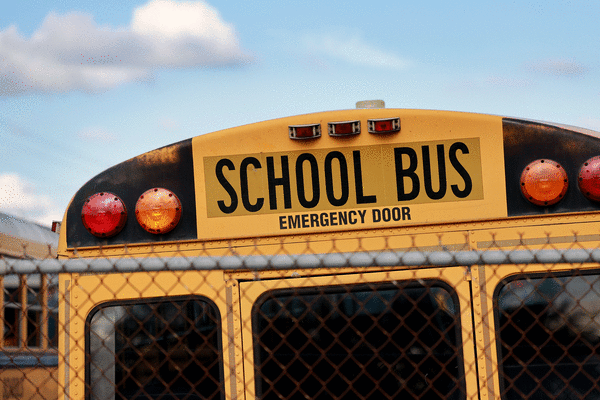
Among other issues, just getting to school is often a problem for students experiencing homelessness. The advocates found that 1,755 students in temporary housing ended last school year waiting for bus service, a problem made worse by 37% of families initially being placed in a shelter in a different borough from their school.
Jennifer Pringle, who oversees Advocates for Children’s work with students in temporary housing, said that until all children have a permanent place to call home, students who are homeless need more support in order to be successful in school.
“That starts with overhauling the decades-old bus contracts and improving transportation,” Pringle said, “so children can get to school in the first place.”
Pringle also called on the city to address “bureaucratic silos” that stop the public schools and social services agencies from working together. For example, if shelters are full in the borough where a child attends school, the Department of Education and the Department of Homeless Services should coordinate to grant a shelter transfer as soon as a place is available.
It’s a strategy that could have really helped Staten Island mom Cleo B. and her 13-year-old twin daughters, who temporarily lived last year at a Brooklyn shelter in East New York.
Cleo, 42, a state human-resources specialist, was forced to resign because she did not have the unpaid family medical leave hours to keep caring for one of her kids, who has cerebral palsy and required three surgeries to help with mobility. Behind on rent and without pay, Cleo and her daughters entered the shelter system in August 2025, and were placed a couple of weeks before the first day of school in a separate borough from I.S. 72 and the young girl’s doctors.
The mom tried to schedule a yellow school bus for her daughters, who because of their housing status were entitled to transportation — to no avail.
“It just never happened. It never happened for me while I was there,” said Cleo, who spoke on the condition her last name not be used. “They said things like, school is starting, and you got here around this time, so maybe that’s why. Nobody can really give me a good answer on why my daughters don’t have busing.”
Instead, Cleo tried Access-A-Ride, the city’s paratransit service. When that failed, the family woke around 4:30 a.m. and took two subways, a ferry and a bus to get to school, further complicating Cleo’s efforts to return to work and get paid. Still, she did not consider pulling her kids out of I.S. 72.
“I never considered it,” Cleo said. “They were already going through this hard time of going through homelessness … Having a new school would have just — I just wanted to try to keep everything the same that I could.”
After Advocates for Children intervened, Cleo was finally able to transfer to a Staten Island shelter and return to work. Nearly a year after entering the system, she moved out of the shelter over the summer and into a two-story house with a backyard close to school.
Advocates for Children’s report comes amid a growing recognition of the need to provide specialized support for homeless students, who because of their unstable housing face unique concerns beyond those associated with poverty.
Nearly half of the city’s students in temporary housing, and 63% of those in shelters, were considered chronically absent in 2024-25, the most recent school year with data available. Only 59% of students in shelters graduated high school on time and 14% dropped out, roughly triple the rate for students with a stable place to call home.
Mayor Zohran Mamdani, then a state assemblyman, ran for City Hall on a promise to make support programs for homeless students a priority. After he took office, the mayor followed through on his campaign pledge to invest in an initiative called Every Child and Family is Known, but through a more modest expansion than the numbers he promised.
“We’re working shoulder to shoulder with our partners across city agencies and advocacy groups to ensure that every student — especially those in temporary housing — have true educational stability,” Schools Chancellor Kamar Samuels said in a statement.
School officials said they continue to expand support teams, strengthen coordination between the schools and shelters, and use federal and city funds to provide direct services.
“Over the last few years we’ve worked with sister agencies to adjust policies so they are better for families — from eliminating the requirement that children must attend all housing meetings to standing up community schools in districts with high concentrations of shelters,” Samuels added. “As this report shows, this work is far from over.”
--------------
©2026 New York Daily News. Visit at nydailynews.com. Distributed by Tribune Content Agency, LLC.






Comments