Gut-wrenching volatility grips Wall Street as AI doubts creep in
Published in News & Features
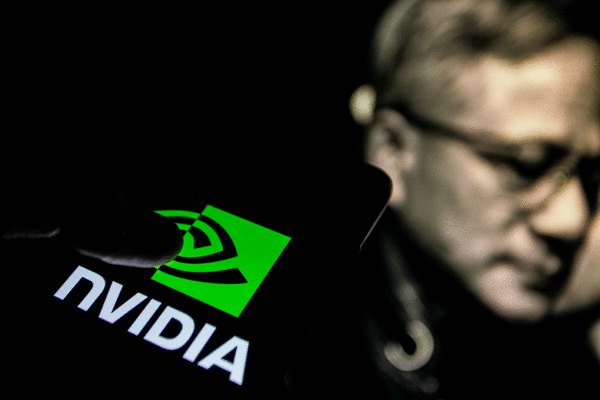
As soon as the opening bell rang on the New York Stock Exchange, the sell orders started pouring in and everybody, it seemed, was again making another jarring rush for the exits.
Just 15 minutes in, the Nasdaq 100 Index was down nearly 5%. And the euphoria that briefly raced across Wall Street on Monday — when Jensen Huang’s return to Nvidia Corp. rekindled bets on the artificial-intelligence trade — had all but disappeared.
Those losses would gradually fade over the course of the afternoon, leaving the Nasdaq down just 0.6% at the close. But across Wall Street, the takeaway was clear: Investors have growing doubts about the sustainability of the AI boom. And that, in turn, is almost certain to keep rattling the market with stomach-churning bouts of volatility as everyone tries to gauge whether the trillion-dollar investments will ever sufficiently pay off.
Jonathan Corpina, who has been on the trading floor of the Big Board for three decades, said the turbulence has faint echoes of what he remembers from the 2008 financial crisis.
“The feeling every day was what’s next?,” said Corpina, a senior managing partner at Meridian Equity Partners. “All of this now feels similar to that — not the magnitude of the selloff and what it did to the economy, but the constant worries.”
Those worries aren’t entirely new. They’ve flared repeatedly since AI breakthroughs started pushing stocks to one high after another and elevated chipmakers like Nvidia that are providing the equipment that’s powering it. Tech stocks tumbled sharply early last year, too, only to ultimately bounce back.
But the pressure has been building over the past few months amid rising doubts over whether AI will deliver profits big enough to justify the lofty valuations or the heavy borrowing being done to finance it. The Federal Reserve’s shift back to raising interest rates is also playing a role.
This month’s elections only added to the uncertainty after voters across the country pushed back against the construction of data centers and delivered a sharp rebuke to President Donald Trump, who has embraced the AI industry.
“The market is no longer debating whether AI will change the world. It’s debating who will make money, how much they will make, and whether the extraordinary amount of capital being deployed will earn an adequate return. Those are very different questions,” said Nadine Terman, chief executive officer of Solstein Capital. “The irony is that the industry could deliver on its technological promises while disappointing investors financially.”
After stocks tumbled last last week, Trump stunned markets by persuading Nvidia to reinstate Huang as the chief executive less than two weeks after his ouster for an affair with an alleged Chinese spy. While that sent stocks surging Monday by allaying worries about Nvidia’s continued role in financing a share of the AI spending, they’ve since given back some of the gains.
“It’s an attempt at an AI bailout and it didn’t work,” said Seth Cogswell, the chief executive officer of Running Oak Capital. “People saw through it.”
Analysts said the selling was orderly, even during the worst of Wednesday’s drop, and the market is drawing significant support from strong corporate earnings and the underlying economy.
But that’s underscored how much the market has been at the mercy of shifting investor sentiment.
Peter Tuchman, a senior floor trader at TradeMas at the New York Stock Exchange, said investors were hunting for explanations for the market’s dramatic moves.
“Phones are ringing off the hook. People are worried asking ‘Why there’s more selling?” he said. “In my decades on this trading floor, I’ve never seen a complete reversal of a story like this one with Nvidia. This is not your grandfather’s stock market.”
Mark Malek, chief investment officer at Siebert Financial, said the market’s U-turns have been disorienting.
“My neck is sore from the amount of head shaking these past 10 days,” he said.
Like others, he said he’s been trying to coach his clients on how to deal with the tumult. He said one experienced investor said “her concern was less about the companies themselves and more about why the market has not bounced yet.” He said she was sticking to her guns, worried she’d miss out on gains when the market bounced back.
As Wednesday drew toward a close, that looked like a good call. By the time the trading day ended, the major benchmarks clawed back most if not all of their losses. The S&P 500 was down just 0.3%. The Dow Jones Industrial Average eked out a modest gain.
“The narrative is doing its level best to shake out all the weak hands,” Malek said. “What’s ultimately left standing is going to be the only the most diehard investors with strong conviction.”
(With assistance from Natalia Kniazhevich, Felice Maranz and Arvelisse Bonilla Ramos.)
©2026 Bloomberg L.P. Visit bloomberg.com. Distributed by Tribune Content Agency, LLC.





Comments