Seniors will pay more for Medicare in 2027; big changes coming across all plans
Published in Senior Living Features





FORT LAUDERDALE, Fla. -- Florida’s 5.3 million Medicare enrollees face a sweeping financial squeeze in 2027 as rising monthly premiums, higher prescription deductibles, and shrinking Medicare Advantage benefits hit simultaneously.
Medicare experts warn that keeping coverage on “autopilot” during Open Enrollment (from Oct. 15 to Dec. 7) could take a heavy toll on seniors’ fixed incomes come January.
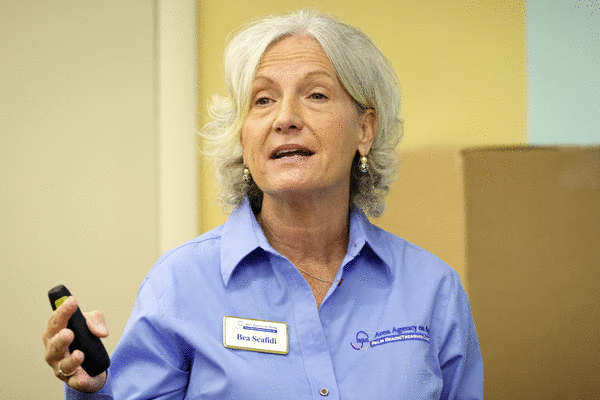
“It looks like Medicare is going to be more expensive,” said Beatrice Scafidi, SHINE liaison with the Area Agency on Aging of Palm Beach/Treasure Coast. “I think the deductible and premiums are going to go up, and your visits to the doctor will cost you more. Your co-pays are going to go up, so if you paid $10 bucks to see your primary last year, you may need to pay $20.”
An additional 140,000 Florida seniors enrolled in Medicare for 2027. Federal projections show as many as 700,000 additional Floridians joining Medicare by 2030. Despite a growing pool of paying members, insurers face severe profit squeezes and operational strains that are reshaping how care is delivered in the Sunshine State.
Almost all Florida seniors will be affected as Medicare Advantage plans pare benefits and raise deductibles, while traditional Medicare sees higher Part D out-of-pocket spending caps and the elimination of $0-premium standalone drug plans.
Higher Original Medicare costs for 2027
As Florida’s Medicare population swells, upcoming federal cost-sharing adjustments to Medicare Part B will affect seniors whether they choose Original Medicare or Medicare Advantage.
For those on Original Medicare, the monthly Part B premium — which covers physician visits, outpatient services, diagnostic tests, and preventive screenings — is projected to rise to $209.50 in 2027, up $6.60 per month. Because premiums are deducted directly from Social Security checks, this increase — combined with higher prescription deductibles — will eat into seniors’ annual Cost-of-Living Adjustment before the money arrives.
In addition, the annual Part B deductible is projected to rise about 3% to $292 in 2027, up $9 from $283 the previous year.
Medigap plans get more costly
For most Florida seniors, Medigap (Medicare Supplement) policies will also cost more in 2027. Carriers nationwide are raising monthly rates, driven by seniors seeking more medical care and policyholders growing older.
In Florida, supplements have become an increasingly popular way to cover the 20% uncapped coinsurance left by Original Medicare. Adding a Medigap policy generally costs between $150 and $300 or more per month, depending on plan type, location, age, gender, and tobacco status.
“Medicare supplements on average are going up 10 to 15 percent yearly. Even the high-deductible Plan G, which usually never has an increase, is getting hit,” said Evan Tunis, president of E&M Global Insurance in Parkland.
Hollywood insurance broker Ricky Rash with Health Options USA sees the same trend. “Anybody who’s on straight Medicare with a supplement is going to be in for sticker shock,” he said.
Medicare Advantage plans shift costs to enrollees
A defining feature of Florida’s Medicare Advantage market is the prevalence of plans charging no monthly premium beyond the beneficiary’s required Part B expense. That trend continues in 2027, with approximately 77% of Broward County’s plan choices and 74% of Palm Beach County’s offering $0 monthly premiums.
Across all plans in the Centers for Medicare & Medicaid Services landscape, the average monthly consolidated premium for Medicare Advantage with Part D is $6.35 in Broward County and $7.81 in Palm Beach County.
However, a $0-premium plan can still require substantial deductibles, specialist copays, and prescription cost-sharing. Provider networks can also differ significantly between plans.
As a result, choosing a plan based solely on monthly premiums can be misleading. As Rash points out, two $0-premium options can differ by thousands of dollars in total out-of-pocket spending over a year depending on an individual’s health needs.
Heading into 2027, private insurers are responding to rising healthcare usage and tighter federal risk-adjustment rules by raising specialist copays, increasing inpatient hospital charges, and shifting more services from flat copays to percentage-based coinsurance.
“The importance of reviewing coverage is particularly high for people already enrolled in Medicare Advantage,” said Scafidi with SHINE, noting that carriers may remain in a county while quietly modifying copays, benefits or doctor networks.
Florida has long been a leading market for Part B Premium Reduction (“giveback”) plans, in which Medicare Advantage carriers credit money directly back into a beneficiary’s Social Security check. For 2027, several major carriers are scaling down or eliminating these rebate dollars altogether.
Insurers are also raising annual out-of-pocket maximums. If an enrollee faces a major illness or hospital stay, they could pay significantly more before coverage kicks in at 100%.
Drug costs will rise
Whether an enrollee relies on Original Medicare or Medicare Advantage, medication expenses are heading up in 2027.
Nationally, about 25 million people are enrolled in standalone Medicare Part D plans, while another 31 million are in Medicare Advantage plans that include prescription drug coverage, according to a KFF analysis of CMS data. In Florida, more than 3.1 million seniors are enrolled in Medicare Advantage plans with drug coverage, while about 850,000 rely on standalone Part D plans paired with Original Medicare.
In 2027, 11 standalone Part D plans will be offered across all Florida counties, up from 10 in 2026. CMS reports that 52.69% of Floridians in standalone Part D plans have access to a lower-premium option than in 2026. Monthly standalone premiums in Florida range from $5.30 for a Centene/Wellcare plan to $326 for a Blue Cross Blue Shield of Florida plan.
Seniors should evaluate more than just monthly premiums. Standard Part D prescription deductibles jump nearly 14% to $700 in 2027 (up from $615 in 2026). The annual out-of-pocket prescription spending cap rises to $2,400 (up from $2,100 in 2026). Once beneficiaries reach this threshold, covered prescriptions are 100% free for the rest of the calendar year.
Seniors can also use the Medicare Prescription Payment Plan, a voluntary program launched by CMS that allows Part D enrollees to spread out-of-pocket pharmacy costs into manageable monthly installments throughout the year.
“It doesn’t lower the amount, it just spreads costs out,” said Alex Cottrill, a KFF senior policy analyst for Medicare. “That’s an option some people might not be aware of.”
Cottrill also noted that Medicare is expanding coverage for GLP-1 weight-loss medications (such as Wegovy or Zepbound) prescribed for chronic weight management under a federal bridge initiative running through 2027.
“In the past, these medications were only covered when prescribed for diabetes or vascular effects, not obesity. Now under the bridge program, through 2027, those prescribed for weight management can get their script covered. You just need to be enrolled in part D to qualify,” Cottrill said.
Medicare open enrollment deadlines
--Oct. 15 to Dec. 7, 2026: You can switch from Medicare to Medicare Advantage or do the reverse and return to Original Medicare. You can also switch Medicare Advantage plans or change prescription drug plans, known as Part D. If you did not enroll in Part D plans when you were first eligible for Medicare, you can do so during this period.
--Jan. 1, 2027: Changes made during fall enrollment will take effect.
--Jan. 1 to Mar. 31, 2027: If you have a Medicare Advantage plan, you can change to a different plan or switch to Original Medicare (and join a separate Medicare drug plan) once during this time. Any changes you make will take effect on the first day of the month following the plan’s receipt of your request.
--Exceptions: You can make changes to your Medicare Advantage and Medicare prescription drug coverage anytime in 2027 if you have special circumstances, such as if you move, are no longer eligible for Medicaid, your plan goes out of business, or you lose coverage from your employer.
--5-Star Special Enrollment: If a 5-star rated Medicare Advantage plan is available in your area, you can switch to it from Dec. 8, 2026, through Nov. 30, 2027. You can make this switch only once during this time period. Coverage typically begins the first day of the month following the month the plan receives your enrollment request. Use the Medicare Plan Finder on medicare.gov to find plans with a 5-star rating in your area.
Doctor and hospital network changes
When reviewing the 2027 Annual Notice of Change or comparing options on Medicare.gov, beneficiaries should not assume their doctors remain in-network simply because the insurer hasn’t changed, warned Tunis, of E&M Global Insurance.
Healthcare systems and physician practices frequently terminate carrier contracts. For example, UHealth will be out of network for UnitedHealthcare’s Preferred Care Network starting Jan. 1.
“You will need to speak to your primary care doctor and specialists and ask, ‘Do you accept Medicare Advantage next year? And if so, what plans are you taking?'” Tunis said.
Star Ratings overhaul and new marketing rules
CMS is executing a structural overhaul of its Star Ratings program for 2027, removing 11 administrative metrics to focus on clinical quality, health outcomes, and patient experience. With fewer total measures, remaining clinical scores carry significantly more weight toward a plan’s final 1-to-5 star rating.
Insurance broker Rash believes this rating overhaul is accelerating plan consolidations across Florida.
“They’re starting to consolidate because their whole goal is to get these star ratings up, because the higher their star rating, the more money the government gives them,” Rash said. “So, instead of offering 10 plans and getting a three-star rating, they just want two or three plans to get that four, four-and-a-half and five-star rating.”
Cottrill cautions against relying solely on star ratings when selecting coverage: “A plan could have an excellent star rating, and it’s not a good fit if you want to keep your doctor who is not in network. That plan might not fit no matter how high its star ratings.”
Other key updates for 2027 include changes in marketing rules. Brokers no longer face a mandatory 12-hour wait period between educational seminars and sales presentations.
“Now that marketing can occur closer to educational spaces, beneficiaries should remain cautious and evaluate claims critically,” Cottrill advised.
In addition, Original Medicare is expanding home-based technology coverage for managing chronic conditions such as heart failure, COPD, substance use disorders, and nicotine dependence.
“Once you’re on Medicare, you have to adapt because it’s never going to be the same from year to year,” Rash said.
South Florida Sun Sentinel health reporter Cindy Goodman can be reached at cgoodman@sunsentinel.com.
Medicare enrollment 2027
As the Medicare landscape shifts in 2027, here are steps seniors should take when choosing a plan:
•Check for changes in medication coverage. Some medications may move to a different cost tier.
•Examine changes to your plan’s providers and benefits. Confirm your preferred doctors and hospitals are in-network. Review the pharmacy network too.
•Check for changes in hospital and specialist copays.
•Compare total expected cost, not just the premium. Add up deductibles, copayments, and the out-of-pocket maximum based on anticipated care and medications.
•Look into prior authorization requirements. These might be a detriment when an illness or injury requires specialized care.
•Consider reviewing a plan’s record of approvals and denials with the state insurance commissioner, especially if you need specialized treatment or medications.
©2026 South Florida Sun Sentinel. Visit at sun-sentinel.com. Distributed by Tribune Content Agency, LLC.








Comments