Serb strongman calls snap vote echoing Putin's power move
Published in Political News
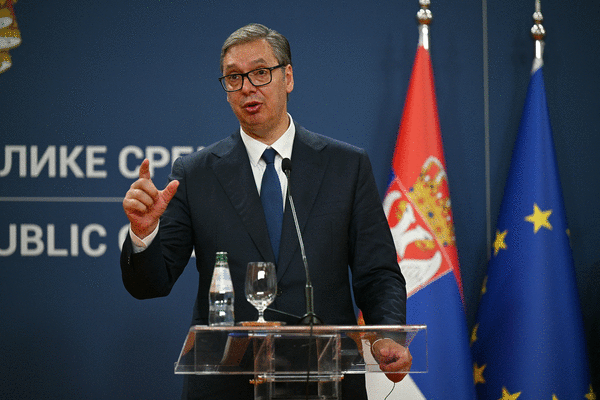
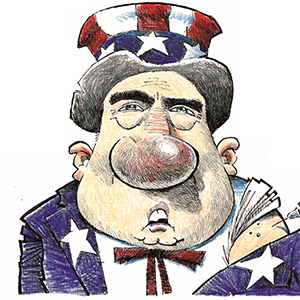
Serbia will hold a snap vote on Oct. 25, setting in motion a political playbook that may see the embattled President Aleksandar Vucic transition to the role of prime minister.
Vucic signed an official decree on the snap ballot and parliament’s dissolution on Wednesday. The vote, long demanded by opposition groups, seeks to try to resolve almost two years of anti-government protests that have evolved from an irritant to a threat for the administration.
“We had unrest and clashes and above all a divided society,” he said of the protests in a televised address to the nation. “You’ll have an opportunity to choose between many options. I ask you to please do that in a peaceful and dignified way.”
Vucic, Serbia’s dominant political figure since 2012, is seeking to emulate Russian President Vladimir Putin by switching to premiership in a bid to keep power. He has said he was looking for early elections to renew his political mandate after his rule was rocked by massive street rallies following a deadly roof collapse at a train station in 2024. The accident sparked allegations of graft and incompetence among the ruling elite.
The vote is widely seen as an attempt by the 56-year-old longtime leader to prolong his political career before his second and final term as president expires in mid-2027. He and his party would face a diffuse protest movement, including students, who’re aspiring to coalesce into a potent political force. Polls are mixed, with some showing he may even be voted out of power.
Student activists have said that they have deliberately avoided picking a leader to avoid becoming a target for the dominant, pro-government media. They have vetted opposition-minded professionals they believe had untarnished reputations to take on the president.
Vucic has repeatedly accused the protest movement of being a foreign-funded attempt to destabilize the country.
Campaigning is well under way, with Vucic touting economic successes during his rule that include nearly tripling Serbia’s economy and personal incomes, record foreign investment and massive infrastructure projects, while keeping public debt in check.
The president has already taken steps to boost his party’s popularity, promising cash handouts for more than 3 million citizens as part of welfare measures worth an estimated €600 million ($683 million). He said it wouldn’t strain the government’s budget or increase the public debt, which would remain at under 50% of GDP.
He is expected to resign soon as president, to prepare for the pivot to premiership. Parliament Speaker Ana Brnabic, his close ally and a former premier herself, would serve as an acting head of state until a new president is elected. No date for the presidential ballot has yet been set.
Under Vucic, Serbia has tried to juggle keeping its stalled bid to join the European Union on track while attracting U.S. and Chinese investment and maintaining friendly relations with Moscow. The president has denied allegations of voter intimidation, ballot box tampering and other irregularities that opponents say have marred previous elections.
He’s turned Serbia into a key gateway for China into Europe, plowing billions of dollars into its industries from mining to humanoid robots.
But the president’s focus on E.U. path ran into trouble this week after the bloc’s top official expressed dismay over the funeral given to a convicted war criminal Ratko Mladic in Belgrade this week.
European Commission President Ursula von der Leyen said “the elements of official support and the presence of some senior Serbian officials at the funeral are deeply regrettable.”
“They demonstrate a failure to confront a dark chapter in Europe’s recent history and contradict the values underpinning Serbia’s path towards the European Union,” she said in a post on X on Tuesday.
The Faktor Plus pollster estimated popular support for the president’s party at 47% in a June survey, well ahead of the 31% backing for the student challengers. However, the non-government organization CRTA found voter support for the student-led candidates was 44% to 35.7% for Vucic’s Progressive Party in mid-July.
—With assistance from Andrea Dudik.
©2026 Bloomberg L.P. Visit bloomberg.com. Distributed by Tribune Content Agency, LLC.










































Comments