NRCC Chairman Richard Hudson loses reelection in North Carolina
Published in Political News
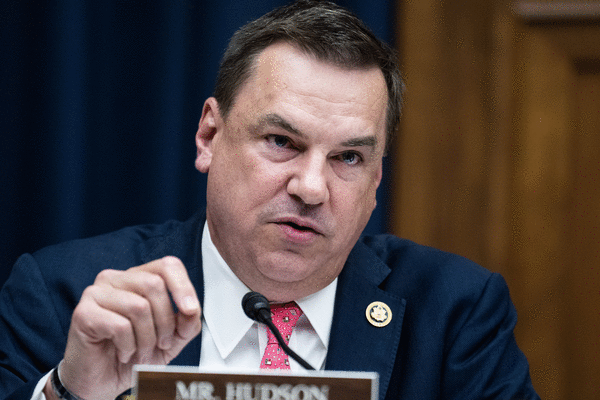
WASHINGTON — North Carolina Rep. Richard Hudson, the chairman of the National Republican Congressional Committee, has lost his race for reelection, a stinging defeat for the man charged with preserving the House majority for the GOP.
Hudson fell to Democrat Richard Ojeda, a former West Virginia state senator who was leading 51% to 49% Thursday afternoon when The Associated Press called the race in North Carolina’s 9th District.
Hudson had already conceded the race Wednesday, when it became clear that his path to victory was closing off.
“[The] voters of North Carolina’s 9th District made their choice and I respect it,” he said in a statement. “Since 2013 I’ve worked for North Carolina families. That includes the soldiers and families at Fort Bragg, who sacrifice more for this country than most people will ever know.”
Hudson is now the second party campaign chief to lose his seat during a midterm election this decade. In 2022, New York Rep. Sean Patrick Maloney lost reelection while serving as chair of the Democratic Congressional Campaign Committee.
Republicans across North Carolina experienced devastating losses on election night. As of Thursday afternoon, Democrats had also flipped the seats of Reps. Addison McDowell, Brad Knott and Tim Moore, as well as the open seat of retiring Rep. Chuck Edwards. The races for five other GOP-held seats remain uncalled, while Democratic Rep. Don Davis was reelected despite being targeted for defeat under a new GOP-drawn congressional map. Republicans also lost control of the North Carolina House and lost seats in the state Senate.
North Carolina’s 9th District, which includes the Eastern Piedmont region and the Fayetteville area, was far from the House battlefield for much of the midterm cycle. President Donald Trump carried the seat by 16 points in 2024, according to calculations by Inside Elections with Nathan L. Gonzales, and Hudson won a seventh term the same year by nearly 19 points. Hudson also held a financial advantage over Ojeda, raising $4.2 million to Ojeda’s $2.9 million through mid-October.
But in the waning weeks of the campaign, signs of Republican concern grew and Hudson’s campaign began spending on ads.
Ojeda was first elected to the West Virginia Senate in 2016. He ran for the U.S. House two years later as a Trump-voting Democrat but lost that race to Republican Carol Miller. He then briefly ran for the 2020 Democratic presidential nomination and also challenged GOP Sen. Shelley Moore Capito later that cycle but lost in the Democratic primary.
Ojeda moved to North Carolina in 2020, he told CityView, a local magazine, and he announced his challenge to Hudson last year.
Throughout the campaign, he attacked the incumbent over his support for Trump’s agenda, particularly the war in Iran. Ojeda is a retired Army major and the district is home to Fort Bragg, the nation’s largest Army base by population, where the Democrat was previously stationed for more than a decade.
“We did the impossible,’’ Ojeda told supporters Tuesday night. “We took on the chair of the National Republican Congressional Committee, a man with political connections, the billionaire donors, and the entire Washington establishment standing beside him.”
Hudson, 55, is finishing his seventh term in the House and his second term as NRCC chair. He had no primary opponent this year and had grown used to winning reelection by comfortable margins.
As a legislator, Hudson focused much of his policy agenda on health issues such as federal pandemic preparedness programs. He serves on the House Energy and Commerce Committee and chairs the panel’s Communications and Technology Subcommittee.
©2026 CQ-Roll Call, Inc., All Rights Reserved. Visit cqrollcall.com. Distributed by Tribune Content Agency, LLC.





















Comments