Commentary: The Supreme Court could deal a death blow to civil rights precedent
Published in Political News
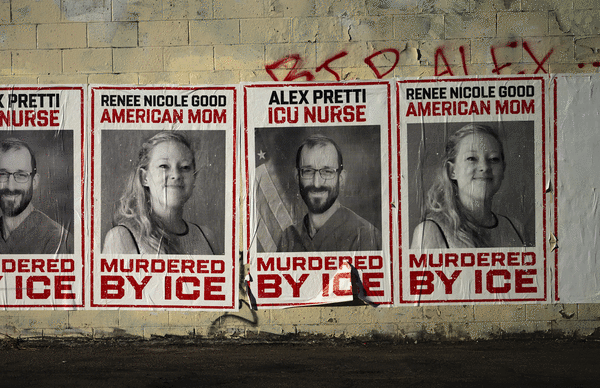
Although it’s difficult to imagine, the Supreme Court looks poised to eliminate the ability for citizens to bring legal action against U.S. Immigration and Customs agents and other federal officers who violate their constitutional rights. Following a hearing for Nielsen vs. Watanabe on Monday, there is every reason to fear that the court’s upcoming decision will be a disastrous one for civil rights enforcement.
The issue stems from the absence of an actual law authorizing suits against federal officers when they violate the Constitution, while state and local officers can be sued for violating the Constitution under federal statute 42 U.S.C. Section 1983, a law that was adopted back in 1871.
However, in 1971, in Bivens vs. Six Unknown Named Agents of the Federal Bureau of Narcotics, the court held that it would allow federal officers to face monetary damages for constitutional violations even though no federal statute authorized the punishments.
The case was brought by Webster Bivens after he was subjected to an unconstitutional and humiliating search by agents of the Federal Bureau of Narcotics and sought damages as compensation for the harms he suffered. The court, in an opinion by Justice William Brennan, emphasized that it is the judicial role to provide remedies for the violations of civil rights.
In an important and often-cited concurring opinion, Justice John Marshall Harlan explained that it is essential that federal courts be able to provide such relief because “it is apparent that some form of damages is the only possible remedy for someone in Bivens’ alleged position.… For people in Bivens’ shoes it is damages or nothing.”
In the decade following Bivens, the Court applied and extended the ruling multiple times. In 1980’s Carlson vs. Green, for example, the court cited Bivens when it allowed a suit to go forward for the violation of the cruel and unusual punishment clause of the 8th Amendment. The justices held that a mother could sue federal prison officials on behalf of her deceased son, claiming that he was the victim of gross inadequacies of medical facilities and staff, which led to his death and constituted cruel and unusual punishment.
But since 1980, in every case raising a Bivens claim, the court has ruled against the person whose rights were violated and further restricted the ability to sue federal officers who violate the Constitution. In 2017’s Ziglar vs. Abbasi, the court found that Muslim individuals detained after 9/11 could not sue even though they suffered serious physical abuse from prison guards’ actions, including broken bones.
In 2020’s Hernandez vs. Mesa, the court held that a border agent could not be sued for firing a shot from El Paso, Texas, that killed a teenage boy in Mexico. In the most recent example, 2022’s Egbert vs. Boule, the court decided that a federal agent near the Canadian border could not be sued for violating a person’s 1st and 4th Amendment rights. The court stressed that recognizing a Bivens cause of action is now “a disfavored judicial activity.”
Nielsen vs. Watanabe, heard Monday, involves prisoner Kekai Watanabe, who alleges he suffered a broken bone when attacked by other prisoners that caused him excruciating pain and that staff nurse Francis Nielsen denied him medical care. If the court follows earlier precedent, this should be an easy case: It involves exactly the same constitutional claim — cruel and unusual punishment — that the court allowed in Carlson vs. Green almost a half-century ago.
But some of the Supreme Court’s conservative justices have called for the overruling of Bivens and none of them has ever voted to allow a Bivens claim. There seems a real possibility that the court’s upcoming decision could deal a death blow to Bivens actions going forward. There then will exist no ability for citizens to sue a federal officer for monetary damages if they violate their constitutional rights, no matter how egregious.
In September, Gov. Gavin Newsom signed the No Kings Act into law, allowing federal, state and local officials who violate the U.S. Constitution to be sued under California law. A few other states, including New York and Massachusetts, have enacted similar laws. Although I believe such statutes are constitutional, they are sure to be challenged in court for being inconsistent with the supremacy of the federal government.
If the Supreme Court ends Bivens claims, there’s an easy fix: Congress can pass a statute allowing federal officers to be sued when they violate the Constitution and the laws of the United States. I expect such a bill could easily pass in 2027 on the strength of the new Democratic-controlled Congress, though I fear President Donald Trump would veto it and that it will take a Democratic Congress with a Democratic president to finally adopt such a law.
In the meantime, those whose rights are violated won’t have a way to bring legal action against federal officers who’ve acted unconstitutionally. I would hope that as the justices consider Nielsen vs. Watanabe, they think of Renee Good and Alex Pretti, two U.S. citizens killed by ICE agents this year, and think of all those whose rights have been trampled by federal agents. Bivens was right: Where a constitutional right is violated, it is the court’s role to ensure a remedy.
____
Erwin Chemerinsky is the dean of the UC Berkeley Law School.
©2026 Los Angeles Times. Visit at latimes.com. Distributed by Tribune Content Agency, LLC.










































Comments