Healey, AG remind Mass. public ICE needs warrant to enter college dorms after Columbia University incident
Published in News & Features
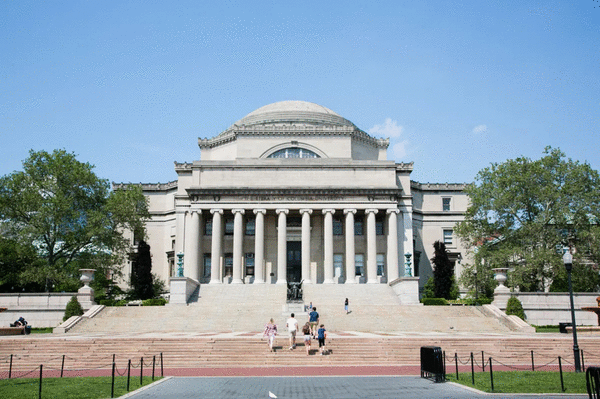
ICE officers need a judicial warrant to enter dorms or other nonpublic campus facilities, the Governor and Attorney General stated in a message to Massachusetts students and faculty after an incident of ICE agents allegedly posing as police at Columbia University last week.
“It’s outrageous that ICE agents lied in order to get into a residential building and arrest a Columbia student – but that’s par for the course for these untrained federal agents who are doing President Trump’s bidding and making us all less safe,” said Gov. Maura Healey. “We want to make sure that students and staff at universities across Massachusetts know their rights.”
The governor reminded students the federal agents do “not have a right to enter any private facilities, including dorms, without a judicial warrant – and you have the right to demand one.”
The state officials’ message comes after five ICE agents allegedly entered Columbia University-owned residence posing as police searching for a missing child and arrested a student around 6 a.m. Thursday, according to the student’s lawyers and Columbia’s acting president. Security cameras captured the agents in the hallway showing pictures of the alleged missing child, the president said.
The arrest of neuroscience and politics student Ellie Aghayeva, a senior from Azerbaijan, triggered campus protests, and she was released later Thursday following apparent intervention from President Trump after a conversation with Mayor Zohran Mamdani.
Massachusetts AG Andrea Campbell said her office is providing guidance to colleges and universities to “help them understand their rights and protect their students, faculty, and staff.”
The governor issued an executive order to requiring federal immigration officers to have a warrant for entry to nonpublic areas and directing higher education institutions to issue staff guidance and policies on immigration interactions in January.
The guidance regarding school communities rights to see a judicial warrant or order from ICE applies to any public or private educational or child care institution, including K-12 schools and colleges, the state officials said. Educational entities are “encouraged to designate areas within their facilities that are closed to the public and post signs to identify these areas as nonpublic,” like classrooms, offices and hallways.
Private spaces in colleges and universities include dorms, research labs and offices, the statement said.
The attorney general also directed the public to a “Know Your Rights” guide to help communities through the basic legal framework of ICE interactions, including the role of local police and how to respond when approached by ICE.
Legislation filed by Healey would bar ICE entirely from courthouses, schools, child care programs, hospitals and churches, state officials noted, in addition to measures allowing parents at risk of deportation to put in arrange guardianship contingencies.
“When ICE agents enter private campus housing without a judge-signed warrant, that’s not law enforcement — that’s rogue behavior. The law requires a judicial warrant, and people have the right to demand to see it,” said AG Campbell.
_____
©2026 MediaNews Group, Inc. Visit at bostonherald.com. Distributed by Tribune Content Agency, LLC.






Comments