Outer Banks erosion reveals buried whale, NC group says. 'Stinks to high heaven'
Published in News & Features
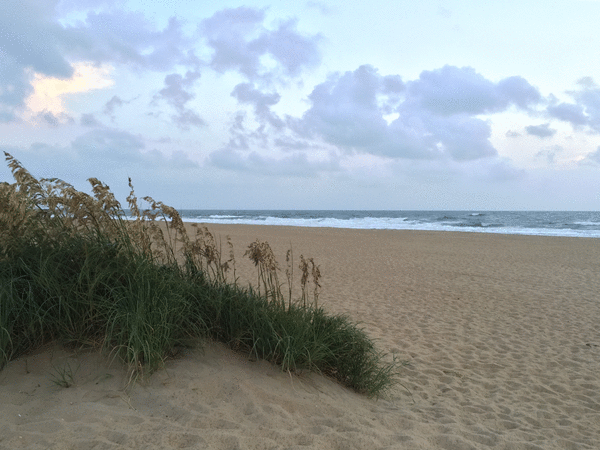
Worsening beach erosion on North Carolina’s Outer Banks is now being blamed for something down right creepy: Digging up a dead whale, according to coastal community leaders.
It’s happening in Corolla and the Corolla Civic Association says the grave is being repeatedly uncovered and recovered at the whims of the tide.
“Approximately four years ago, a whale that washed ashore was professionally examined through a necropsy and properly buried above the high-tide line, as is standard practice. At the time, the burial location was considered safe and stable,” the association wrote in a March 4 Facebook post.
“However, the ongoing loss of beach volume has now allowed erosion to uncover portions of that burial site. The result is exactly what one might expect from a four-year-old whale carcass reappearing on the beach: it stinks to high heaven. It’s a strong and unpleasant reminder that the shoreline is changing.”
Two humpback whales in the 28-to-38 foot range washed ashore near Corolla in 2019, and it’s unclear which grave has been uncovered, according to Barbara Marzetti, president of the association's Board of Directors.
“There were very large graves, and sometimes the tail is buried separately nearby,” she told the Charlotte Observer. “The county has sent staff out, but they have not been able to locate what our folks saw and smelled earlier. ... (We’re) trying to get a meet set up for them.”
The Charlotte Observer reached out to the Currituck County Public Works officials, asking if the whale might be reburied. County officials have not yet responded.
Civic leaders say the situation is “a brand-new consequence” of the erosion effecting the county’s 22.6 miles of beaches. Protective dunes are vanishing and “numerous beach access stairs have been lost or damaged,” the association says.
The damage has been far worse on the barrier islands to the south. Erosion has consumed entire rows of homes on Hatteras Island, with Cape Hatteras National Seashore reporting 31 beach homes destroyed since 2020.
A shoreline stability report was released by Currituck County in 2025, and it projected 43 oceanfront houses in the county could be impacted by erosion in 20 to 30 years.
The county’s Board of Commissioners has a retreat and work session scehduled Friday, March 6, and the agenda includes the presentation of a shoreline stability and beach management plan.
It’s a critical topic, since Currituck’s beaches generate “more than 60% of the county’s total revenue,” the civic association notes.
“Beach erosion is no longer an abstract future concern. It is affecting infrastructure, property protection, and daily life now,” the association noted.
“The community is hoping the plan will provide a coordinated path forward to address erosion, beach maintenance, and long-term resilience before additional storm seasons compound the problem. Until then, the (whale) situation serves as a vivid illustration that erosion impacts more than sand and dunes.”
Corolla is about a 225-mile drive northeast from downtown Raleigh.
---------
©2026 The Charlotte Observer. Visit at charlotteobserver.com. Distributed by Tribune Content Agency, LLC.






Comments