Iran’s ruling structure explained
Published in News & Features
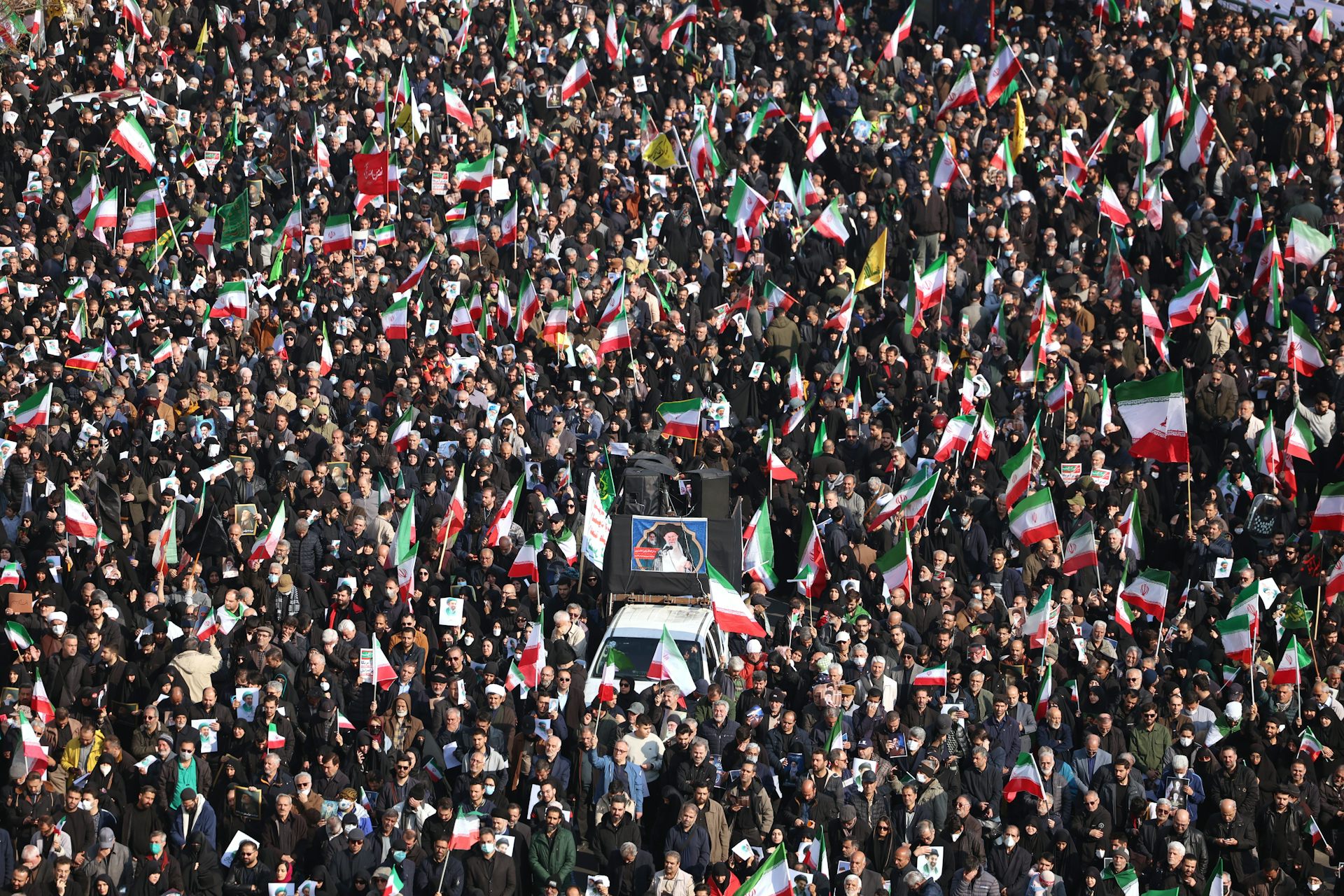
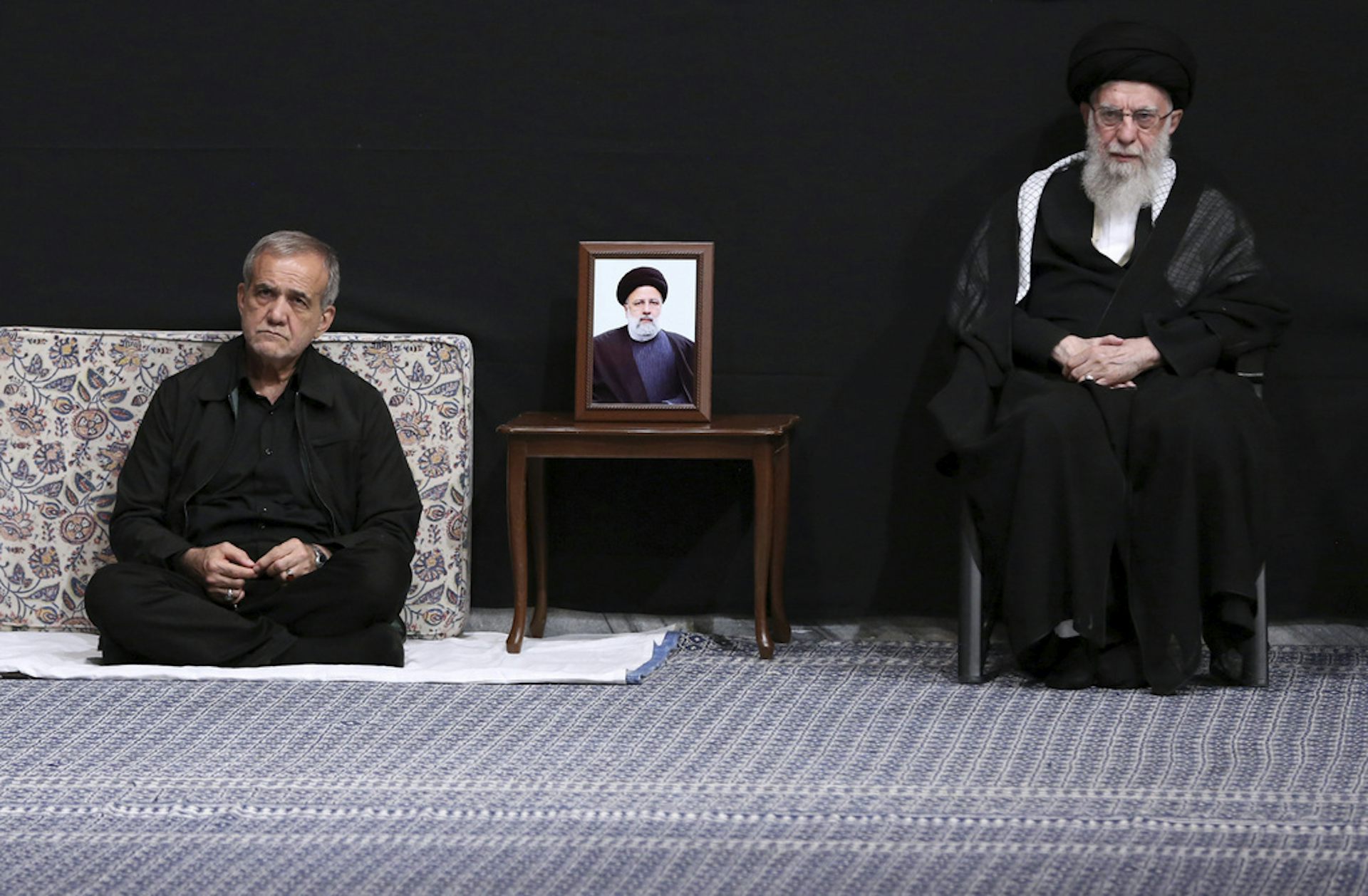
Iran’s new ruler is already a marked man.
U.S. President Donald Trump has said Mojtaba Khamenei, who replaced his slain father, Ayatollah Ali Khamenei, as the country’s supreme leader, is an unacceptable choice and threatened to assassinate him if he does not agree to U.S. demands.
Although the supreme leader possesses disproportionate power, he is not the single authority. Instead, he is one of several positions and institutions through which the Islamic Republic’s 47-year-old regime organizes its ruling structure. Below is a rundown of how each of these entities functions and interacts with one another.
After the Iranian Revolution of 1979, the position and office of supreme leader was created by the Iranian Constitution. It is based on the concept of the Guardianship of the Jurist, or “Velayat-e Faqih.”
Under Twelver Shiism – the sect of Shiite Islam that Iranians follow – the concept asserts that state affairs should be administered by righteous jurists, or faqih, until the return of the 12th imam, who is believed to have gone into hiding in 874 C.E. This concept was conceived by the first supreme leader, Ayatollah Ruhollah Khomeini, who ruled Iran for 10 years until his death in 1989.
Initially, the constitution called for the supreme leader to be a grand ayatollah and “source of emulation,” or marja’ al-taqlid – the highest-ranking cleric in the Shiite religious hierarchy. In 1989, the constitution was amended to allow Khamenei, who was a midranking cleric at the time, to assume the position from the ailing Khomeini.
Although the supreme leader is a lifetime appointment, Article 111 of the constitution authorizes the Assembly of Experts to dismiss him if he is deemed politically and religiously incapable or unqualified.
Inside the Islamic Republic or ruling system, the supreme leader is the ultimate religious and political authority. He commands the armed forces, supervises the state media and appoints the chief justice, who is the head of the judiciary.
According to articles 57 and 110 of the constitution, the supreme leader sets domestic and foreign policy and supervises all branches of the government, including the executive, legislature and judiciary. Through the Guardian Council, he has the power to vet electoral candidates and veto parliamentary laws.
Following the revolution in 1979, the new constitution established the position, or office, of the president. The first presidential election was held in 1980.
While the supreme leader is the head of state, the president is the head of the government. After the supreme leader, the president is the second-in-command of the executive branch. As such, he answers to the supreme leader and executes his decrees.
Every four years, presidential elections take place with the participation of Iranians at least 18 years old.
If reelected, the president cannot consecutively serve for more than two terms. It should be noted that every president has done so, except for Ebrahim Raisi, who governed from 2021 to 2024 and died in a helicopter crash before the end of his first term.
Before the election, all candidates are vetted by the Guardian Council, which is controlled by the supreme leader.
As the chairman of the Cabinet, the president appoints its ministers, pending a parliamentary vote of confidence. That said, the supreme leader has the authority to dismiss and reinstate them, along with the vice president.
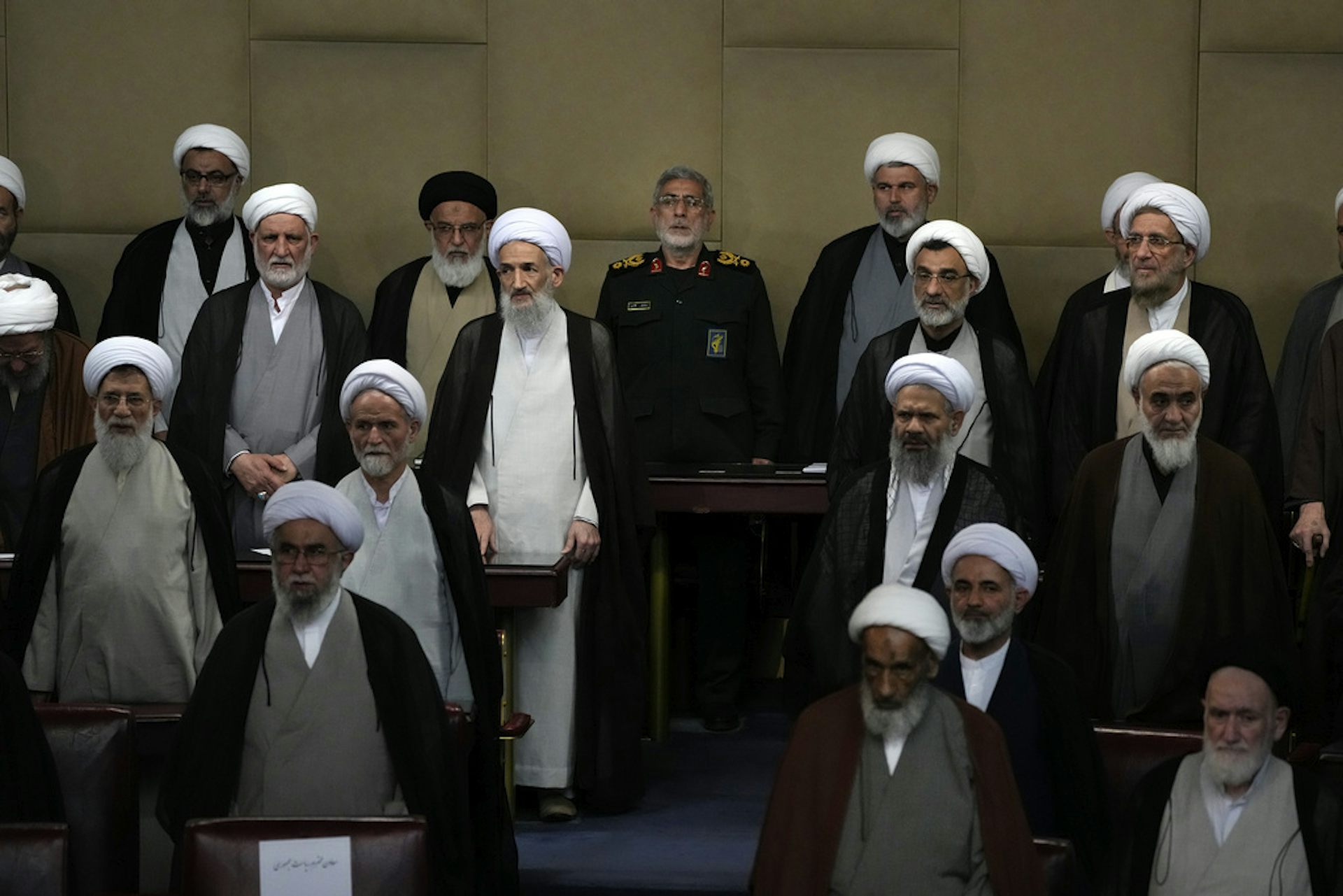
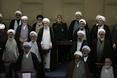
In 1979, the Assembly of Experts of Leadership, or Majles-e Khobregan-e Rahbari, was created in the new constitution and held its first election the same year. Article 111 of the constitution authorizes the assembly to appoint, supervise and, if necessary, remove the supreme leader.
In this sense, the assembly acts as a deliberative body and is legally required to convene at least twice every six months. Its proceedings have remained strictly confidential and closed to the public.
The Assembly of Experts contains around 80 members. As ayatollahs or mujtahids, they are experts in Islamic law and exercise independent reasoning, or ijtihad. During the Islamic Republic’s history, the number of members has ranged from 82 in 1982 to 88 in 2016 and 2024. They serve eight-year terms and are directly or popularly elected by Iranians citizens.
At the same time, and as with other elections, the Guardian Council – which is controlled by the supreme leader– vets all the candidates who apply to run for office or enter the election, making the process far from free and fair.
In essence, the supreme leader approves the candidates who are potentially elected to a body that oversees him. For this reason, as observers point out, the assembly has not been known to seriously supervise or overtly challenge him.
In the past two elections for the Assembly of Experts in 2016 and 2024, the Guardian Council disqualified hundreds of candidates. Many of them were moderates and reformists who opposed the supreme leader on various issues.
Consequently, the choice among voters was largely limited to conservatives and hard-liners who currently dominate the assembly.
According to the Iranian Constitution, the Guardian Council, or Shoura-ye Negahban, has the power to veto laws passed by the popularly elected parliament. It is also authorized to vet candidates in elections, including those for the presidency, parliament and Assembly of Experts.
The council is composed of 12 jurists and lawyers who specialize in Islamic law and jurisprudence. They serve six-year phased terms in which half the members change every three years. The supreme leader appoints half of the council’s members and can dismiss them at will anytime. The chief justice appoints the other half, with a parliamentary vote of confidence.
Since the supreme leader also appoints the chief justice, he consequently controls the council. At the same time, the council has been known to assert a degree of agency and autonomy, as evidenced by the supreme leader occasionally ordering it to reverse bans on particular people running for public office.
Since the late 1990s, the council has disqualified a growing number of reformist candidates, many of whom have been at odds with the supreme leader over certain issues.
Consequently, conservatives and hard-liners, including those affiliated with the Revolutionary Guard, have increasingly dominated the parliament and Assembly of Experts.
Nevertheless, the Guardian Council has been unable to prevent reformists and moderates from participating in elections and even winning them, as in the case of current President Masoud Pezeshkian.
In 1988, the constitution was amended to establish the Expediency Discernment Council of the System, or Majma’-e Tashkhis-e Maslahat-e Nezam.
The council’s chairman and other members are appointed by the supreme leader every five years. The council originally consisted of 13 members.
The Expediency Discernment Council initially acted as an administrative assembly that mediated and resolved disputes and differences between the Guardian Council and parliament over legislation.
Throughout the years, and based on articles 110 and 111 of the constitution, the council evolved into a body that advises the supreme leader on domestic and foreign policy and strategy.
Between the late 1990s and early 2000s, Khamenei relied on the Expediency Discernment Council to reduce the powers of the reformist-majority parliament and pressure it to approve the chief justice’s six appointees to the Guardian Council.
He also expanded the Expediency Discernment Council to 34 members – 25 of whom he appointed – and stacked it with conservatives.
Since 2007 it has consisted of 27 members, all of whom are appointed by the supreme leader. In the mid-2000s, Khamenei delegated some of his authority to the council to supervise the three branches of government.
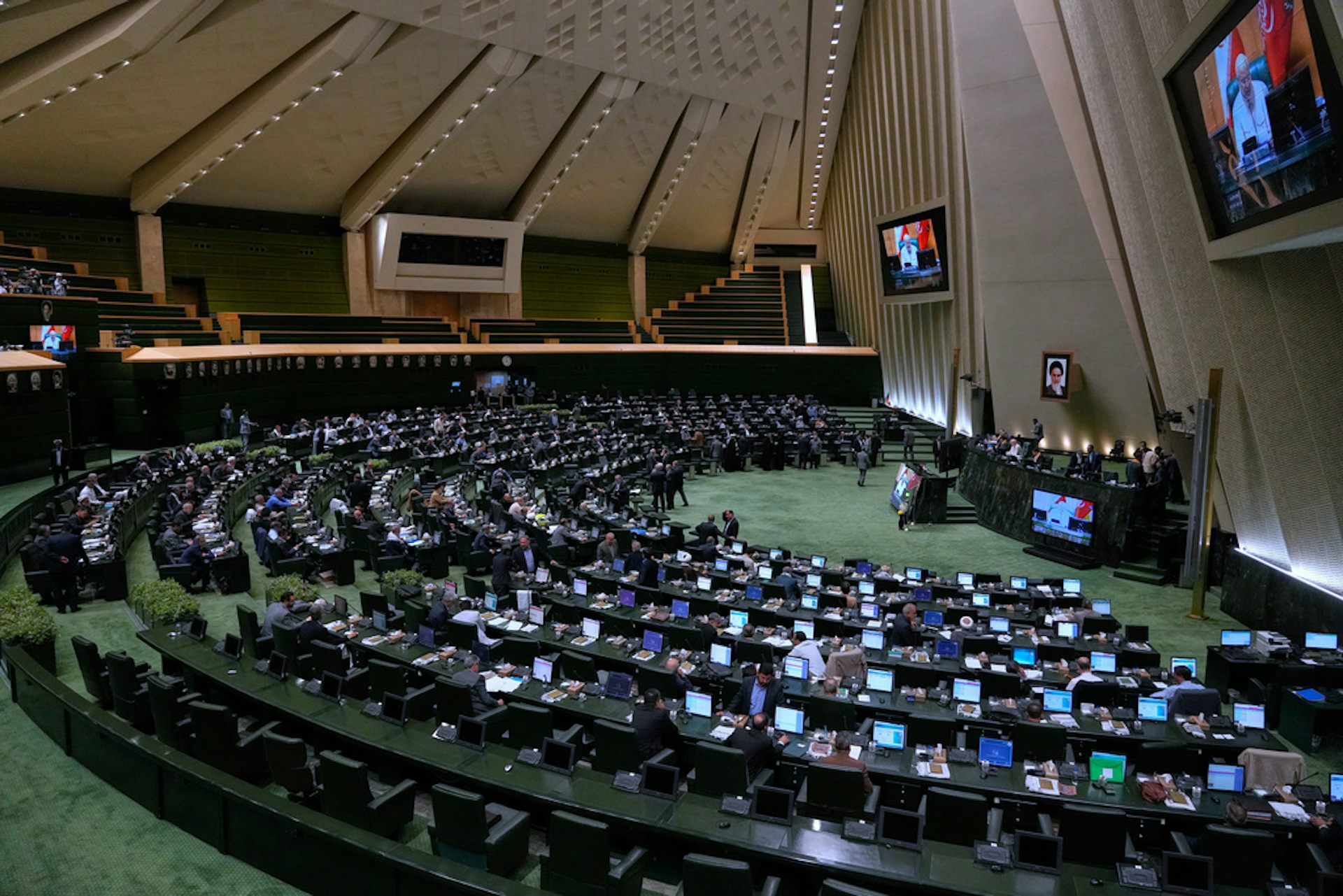
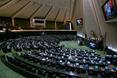
The Islamic Consultative Assembly of Iran serves as Iran’s parliament and consists of a unicameral national legislative body. Representatives serve four-year terms and are elected by a popular vote.
Alongside the executive branch, the parliament can introduce legislation or propose new laws. That said, its capacity to pass laws is constrained when the Guardian Council construes them as contradicting or conflicting with the constitution and religion.
The parliament votes to approve the president’s Cabinet appointees. Alongside the supreme leader, it can also dismiss them and impeach the president for official misconduct.
Since 1979, the parliament has been chaired or led by six speakers, including, since 2020, Mohammad Bagher Ghalibaf, a conservative former commander of the Revolutionary Guard, which serves as the main armed force of Iran.
During the 2024 parliamentary election, which had a historically low voter turnout of 41%, the Guardian Council disqualified most moderate and reformist candidates. This paved the way for conservatives and hard-liners to secure a sweeping majority of 233 out of 290 seats.
It is inside this complex landscape of individuals and institutions that Mojtaba Khamenei has been appointed supreme leader. Although he stands at the pinnacle of the Islamic Republic’s ruling structure, it does not rely on him alone.
This article is republished from The Conversation, a nonprofit, independent news organization bringing you facts and trustworthy analysis to help you make sense of our complex world. It was written by: Eric Lob, Florida International University
Read more:
Iran and Ukraine are changing the EU and testing its unity
Twelver Shiism – a branch of Islam that serves both as a spiritual and political force in Iran and beyond
Iran war: 4 big questions that help clarify the future of the Middle East
Eric Lob is affiliated with the Carnegie Endowment for International Peace.






Comments