Chicago police brass are mum on new gunshot detection tool as aldermen push for answers
Published in News & Features
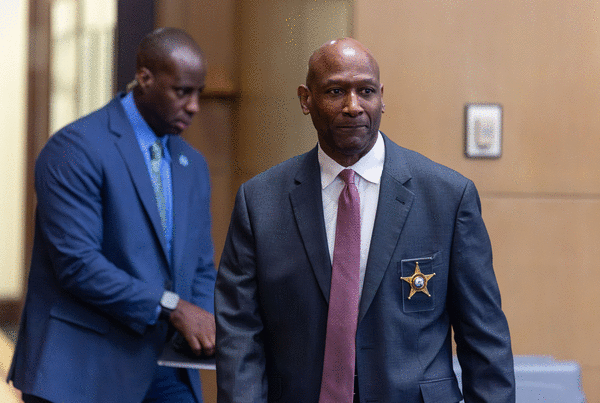
CHICAGO — Police officials had few answers Wednesday as aldermen questioned them about the gunshot detection technology Mayor Brandon Johnson plans to start testing in Chicago neighborhoods soon.
Interim police Superintendent Fred Waller acknowledged a gunshot detection pilot program could launch across a third of the city in as little as a week. But as aldermen pressed for answers about which company will provide the technology and how it will operate during the Police Department’s annual budget hearing, the top cop had little more to say.
When probed, he called the technology a “valuable tool,” while steering questions about specifics to subordinates who ultimately declined to give clear answers. But walking out of the hearing chamber during a break, Waller suggested he knew little when asked for details about the impending rollout.
“I wish I knew, I wish I knew more,” he said.
The lack of answers comes after aldermen expressed shock last week when Johnson’s administration announced the pilot program, part of the mayor’s effort to replace the controversial ShotSpotter gunshot detection system he got rid of in 2024.
A bloc of Johnson opponents on the council, many of whom sought to prevent his termination of ShotSpotter, called a mid-October meeting to question Chief Procurement Officer Sharla Roberts about the status of the city’s efforts to secure a new gunshot detection system. Roberts did not show up to answer their questions, but surprised aldermen with a letter that day informing them Johnson would start testing new anti-violence programs, “including gunshot detection systems.”
“We anticipate that the pilots will be operational within the next two weeks,” Roberts said in the Oct. 20 letter.
Her office doubled down Wednesday on its decision to not identify the technology, calling it “our best practice to not disclose the names of potential vendors during the ongoing negotiations process until the contract is fully executed,” according to a statement from spokesperson Sha-Narah Bratt.
But Johnson spokesperson Allison Novelo on Wednesday said testing will start “as soon as possible” with updates to come in early November. The pilot testing is separate from the city’s procurement process and will run six months before data is analyzed, Novelo said.
She identified several other programs that will be tested, including “drone-based situational awareness,” license plate recognition, evidence collection and violence interrupter engagement tools.
For his part, Johnson in a Wednesday statement touted the sharp drop in violent crime in the last two years and pitched the pilot as a way to vet often expensive police tools.
“These pilots ensure that before we make long-term commitments, we understand what works, listen to the communities impacted, and make sure we’re getting results for Chicagoans, not simply enriching large corporations,” he said.
The city first began the process for procuring a replacement gunshot detection system in February 2025. As he did last year, Johnson has earmarked $5 million for gunshot detection technology in his 2027 budget proposal.
At Wednesday’s hearing, Waller followed the administration’s lead and refused to name or describe the new gunshot detection tool, passing questions about specifics off to a subordinate.
“As you’re all aware, there’s a RFP that’s out there that’s active right now,” said Dan Casey, managing deputy director at the Office of Public Safety Administration. “Unfortunately, we can’t discuss this if it’s there.”
The lack of clarity frustrated many of the aldermen who pushed Johnson to keep the ShotSpotter system that the mayor repeatedly derided as an overly expensive and unreliable “walkie-talkie on a stick.”
“Let’s just let the cat out of the bag,” Ald. Matt O’Shea said. “We need procurement here. We need the mayor’s office here to tell us this pilot.”
Ald. Marty Quinn, 13th, pressed Waller on why his ward’s police district wasn’t included to test the unidentified technology.
“Why wasn’t the 8th District a part of that? People are really aggravated for being left out. It doesn’t make sense,” he said.
Waller said the districts were picked based on upticks in violent crime and told Quinn he would look into adding the 8th District to the pilot program.
“That would be most helpful. I’d have most confidence in working with your department on that, as opposed to the mayor’s office on that,” Quinn said.
The questions about the technology lingered as aldermen inspected the $2.25 billion budget Johnson proposed for the Police Department next year.
The plan would once again give CPD by far the largest budget of any city department. It marks a $138 million increase, almost all of it covering police pay raises.
Waller touted the department’s efforts to rein in overtime spending as proof CPD leaders “take our fiscal responsibility seriously.” The department had overspent its year-to-date overtime budget by $14 million at the end of September, but had spent almost $7 million less than it had the year before, according to police data.
Johnson’s budget includes plans to not fill 368 police officer vacancies and 11 sergeant positions and would convert 132 sworn police positions into civilian positions, part of a yearslong process to free up desk-duty officers and cut costs.
In addition to its $2.24 billion operating cost, another police-related expense is proving to be one of the thorniest points of contention as City Hall crafts a budget.
Johnson called for the city to borrow $480 million to pay for lawsuit settlements tied to alleged police misconduct, most decades old. Aldermen have questioned the plan, a potential red flag for credit rating agencies, but the City Council shares broad consensus that the city must find the money to pay one way or another.
_____
©2026 Chicago Tribune. Visit chicagotribune.com. Distributed by Tribune Content Agency, LLC.





Comments