Measles count in Minnesota surges to highest in decades
Published in News & Features
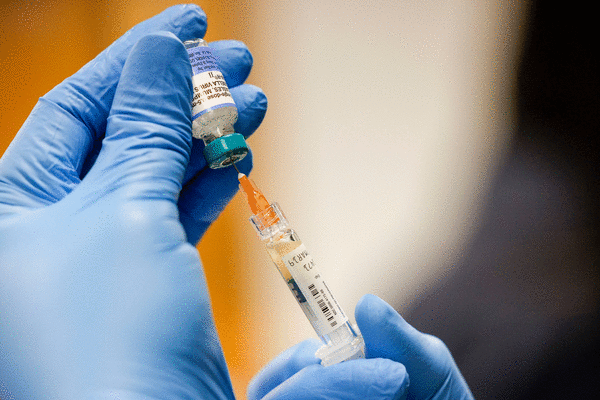
The measles virus has continued to spread in Minnesota's Todd County because of a lack of widespread vaccination, bringing it to the highest level since at least 1990.
In the past week, 58 confirmed infections in the county helped raise Minnesota’s total this year to 139. The update, provided Thursday by the Minnesota Department of Health, also included one case in a different location: Scott County, where a person was infected during travel outside the country.
All the latest infections involved unvaccinated individuals, said Jayne Griffith, a senior epidemiologist in the Minnesota Department of Health’s infectious disease division.
“There is a lot of measles out there,” she said, “and being unvaccinated is a big risk.”
Wisconsin, meanwhile, reported its first measles death since 1990. The victim was an infant. The state to the east has reported 431 measles cases so far this year, mostly in the southwestern region that includes some border counties with Minnesota.
“My heart is broken for the family,” said Kirsten Johnson, secretary of the Wisconsin Department of Health Services, in a written statement. “Any death of a child is a tragedy and even more so when it is related to a vaccine-preventable disease.”
Measles is caused by exposure to a highly infectious virus, which can linger in droplets in the air long after they have been spread by infected individuals who cough, sneeze or speak.
The illness involves a characteristic head-to-toe rash along with fever and breathing problems. About one in 10 cases requires hospitalization, though Minnesota so far has only reported three such severe cases.
The U.S. has confirmed 4 deaths so far this year out of 4,852 confirmed measles cases. That total does not include Minnesota’s update or the Wisconsin death.
Minnesota’s case count this year is nearly double the 2017 outbreak of 74 infections that centered on child-care facilities in the Twin Cities.
Measles was declared eliminated in the U.S. in 2000 through widespread adoption of the measles, mumps and rubella (MMR) vaccine. When provided in two doses, usually to children in their preschool years, the vaccine is 97% effective at preventing measles transmission.
Vaccine hesitancy grew during the COVID-19 pandemic. Minnesota has seen its rate of children vaccinated against measles in their preschool years plummet from 92.5% before the pandemic to 86.5% in the 2024-25 school year.
Vaccination rates are even lower in Todd County as well as Fillmore County, which also experienced a recent cluster of seven measles cases that hasn’t expanded.
“That one was good fortune, to be honest,” Griffith said. “The index case really did not have a lot of exposure (to others) while infectious.”
Both counties are home to sizable Amish communities where most residents have religious objections to vaccination. State health officials have declined to confirm whether those communities have been involved in the latest measles clusters.
More cases are likely in Todd County, though, where the virus has so far spread within “close social networks,” Griffith said. “Measles might be introduced to a family and maybe that family has 10 members and they’re all unvaccinated. And maybe they have a cousin’s family who lives next door and they’re all unvaccinated.”
The state has obtained more measles vaccine doses from federal stockpiles and distributed them to local public health agencies to try to protect more unvaccinated individuals who are at risk of exposure.
Health officials encouraged unvaccinated adults statewide to reach out to their medical providers and schedule shots. Doses are widely available and often covered by health insurance as preventive care.
Lakewood Health System in Staples has stepped up screening of patients entering its hospital and clinics and asked them about possible measles exposures. It also obtained doses of an antibody therapy that can reduce the impact of measles if provided shortly after infection.
The central Minnesota health system also is offering parents the option of vaccinating their infants, even though the usual schedule calls for a first dose at 12 to 15 months of age.
©2026 The Minnesota Star Tribune. Visit at startribune.com. Distributed by Tribune Content Agency, LLC.






Comments