State Supreme Court rules felons can be stripped of gun rights only if they are a danger to others
Published in News & Features
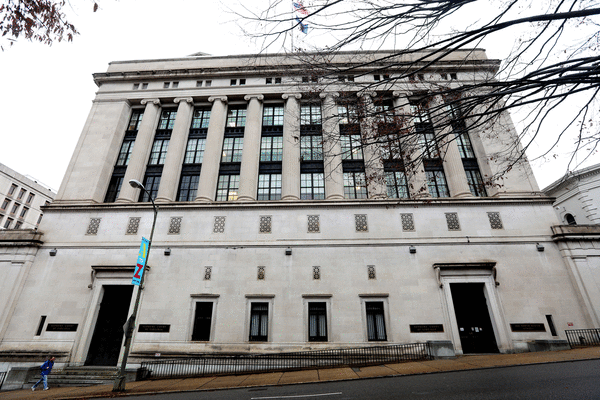
The Virginia Supreme Court on Wednesday handed down a ruling that calls into question Virginia’s lifetime gun ban for those convicted of non-violent felonies.
The high court did not entirely toss the state’s restrictions on felons owning guns. But justices said the law was unconstitutionally applied to a Frederick County man, given that his prior felonies did not show him to be a danger to society.
As a result of Wednesday’s ruling, experts said, charging a person with “possessing a firearm as a non-violent felon” will be more challenging for prosecutors. Defendants, the new ruling states, cannot be stripped of their gun rights unless a court concludes that they are a danger to others — such as by committing a violent crime.
“It’s probably one of the most significant Supreme Court decisions from Virginia in recent history,” said Mario Lorello, a Virginia Beach criminal defense lawyer and former prosecutor. “Because what it’s doing it’s fundamentally altering the way the Commonwealth can prosecute one of its most common felony offenses.”
Now for the lifetime gun ban to stick, he said, prosecutors have to prove that a felon was violent in the past. That won’t be easy, Lorello said, for people convicted only of non-violent felonies such as drug dealing, certain burglaries or a third DUI.
“As of yesterday, they were prohibited for the rest of their life from possessing a firearm,” Lorello said. The ruling “leaves open the question as to whether or not they can be prosecuted or not.”
“I think the answer is no.”
The Virginia Supreme Court’s seven-member court unanimously held on Wednesday that even convicted felons qualify as “the people” under the Second Amendment’s language that “the right of the people to keep and bear arms shall not be infringed.”
Under historical precedent, the justices said, citizens can lose their gun rights only if a state has demonstrated that they pose “a credible threat to the physical safety of another.”
The historical precedent factor is crucial because of U.S. Supreme Court decisions on gun issues in recent years.
For example, under the 2022 U.S. Supreme Court decision, New York State Rifle & Pistol Association v. Bruen, states must be able to point to historical precedent to justify an infringement on someone’s right to bear arms.
In other words, if a particular gun regulation — or a “historical analogue” to the restriction — did not exist at the nation’s founding, there’s a very good chance the restriction violates the Second Amendment to the Bill of Rights.
For robbery and murder convictions, Lorello said, “there’s a historical tradition to prevent those individuals from possessing firearms.” But there’s “no historical tradition” for stripping all non-violent felons of gun rights.
In its 41-page ruling written by Supreme Court Justice Wesley G. Russell Jr., the state Supreme Court concluded that merely because someone has a felony on their record doesn’t automatically render them a physical threat to others.
The case in question stems from a 2023 case in Frederick County, which surrounds the city of Winchester in the northernmost part of the state.
According to an outline of the case in the ruling, police responded to a domestic disturbance after a woman asserted that a man named Derek Wade Ginevan grabbed a shotgun and pointed it at her.
Ginevan admitted to possessing the shotgun, but denied pointing it at the woman. But he confirmed that he had prior felony convictions, and he was charged with possession of firearm as a convicted felon.
The convictions, according to the opinion, include a 2011 drug possession conviction, three probation violations, and 2018 convictions for obtaining money under false pretenses and possession of ammunition by a convicted felon.
Under state law, it’s illegal for anyone convicted of a felony — violent or non-violent — to possess a firearm or ammunition.
The crime is punishable by one to five years if the prior crime is a non-violent one, though it’s a mandatory two years if the felony was less than 10 years earlier. A five-year sentence is mandatory if the underlying crime was violent.
In Givenan’s case, the prior charge of possession of ammunition as a convicted felon was one of dozens of crimes classified by the General Assembly as “violent crimes” under state law.
Ginevan’s attorneys filed a motion to dismiss the charge, arguing that Virginia’s law stripping felons of the right to bear arms was being unconstitutionally applied to him.
The trialjudge in Frederick County denied Ginevan’s motion to dismiss.
The judge, according to the Supreme Court opinion, said that the General Assembly classified Ginevan as a “violent felon” in Virginia on account of the prior ammunition charge. As such, the judge concluded, he’s not part of “the people” protected by the Second Amendment’s right to bear arms.
Ginevan entered a conditional guilty plea, giving him the right to appeal. The appellate court said Ginevan fell within the definition of “the people,” but still deferred to the General Assembly’s classification of the charge as a violent crime.
But the Virginia Supreme Court reversed that, saying the General Assembly doesn’t get to determine what’s a violent crime.
In other words, the justices said there must be “evidence of actual violence” related to Ginevan’s previous conviction. Though Ginevan was previously convicted of the ammunition possession count, there’s no “proof or judicial finding” that he was “a credible threat to the safety of another” on that basis alone.
The decision noted that the state statute barring felons from owning guns for life is extremely broad. To charge someone with violating the statute, prosecutors need to prove only that someone was convicted of a felony — and later possessed a gun or ammunition.
“It applies equally to a convicted felon who possesses a single bullet with no means to fire it and a convicted felon who possesses an entire arsenal for the stated purpose of killing his fellow citizens,” Justice Russell wrote.
It’s a problem, the justices said, that a judge doesn’t rule on whether someone “is now or has ever been a danger to others.”
“The absence of such evidence means the Commonwealth failed to carry its burden” in prosecuting Ginevan, the Supreme Court decision said. “The Commonwealth failed to show that the statute permanently disarming him is in keeping with the nation’s historical tradition of firearm regulation.”
As such, the way the prosecutors apply the state’s firearms ban to Ginevan “violates the Second Amendment.” The high court reversed the Court of Appeals’ decision and vacated Ginevan’s conviction.
Justice Russell wrote that the court’s decision on Wednesday was “a narrow one.”
“A case dealing with different offenses, a defendant with a different criminal history, or a different evidentiary record may well lead to a different conclusion,” he wrote.
There are future questions that will arise from the opinion, Lorello said, such as whether the decision can be applied retroactively to past cases and whether those convicted only of non-violent felonies will have their gun rights restored. He said a court will have to rule on that too.
“I would be willing to bet this case has already been cited in thirty to forty briefs by lawyers working during the holiday,” said Brad Haywood, Executive Director of Justice Forward Virginia, a nonprofit founded by public defenders who advocate for justice system reforms.
“It will be cited all the time. It is a really big deal.”
Haywood has been a defense attorney for over two decades, and six of those years were spent heading the Public Defender’s office in Arlington and Falls Church. He said he’d estimate his attorneys represented about a thousand clients who were charged with possessing a firearm as a convicted felon.
“Of all the crimes we encounter in our jobs, this one probably has some of the biggest racial disparities in terms of who is prosecuted and convicted,” Haywood said.
A majority of those charged live in neighborhoods that aren’t safe and possess firearms for protecting themselves and their families, he said.
Haywood added that the charge, punishable by a mandatory two years in prison, presents “an insanely disproportionate” consequence for those who have never committed a violent crime and stayed out of the justice system for up to a decade.
Wednesday’s ruling, “it’s a big win for racial justice,” Haywood said.
After Wednesday, prosecutors now have to present evidence to prove that an individual’s prior conviction was violent and presented a danger to the public to find them guilty of possessing a firearm as a felon, Haywood said.
Virginia’s Office of the Attorney General, through a spokesperson, cautioned that the high court’s ruling was for a specific case, and is not applied to all convicted felons broadly. The office said it is reviewing the ruling.
Appealing Ginevan’s case to the U.S. Supreme Court, Haywood said, could present questions for state bans on firearm possession by convicted felons across the country.
_________
©2026 The Virginian-Pilot. Visit at pilotonline.com. Distributed by Tribune Content Agency, LLC.





Comments