
Environmental Nutrition: Raisin’ the bar
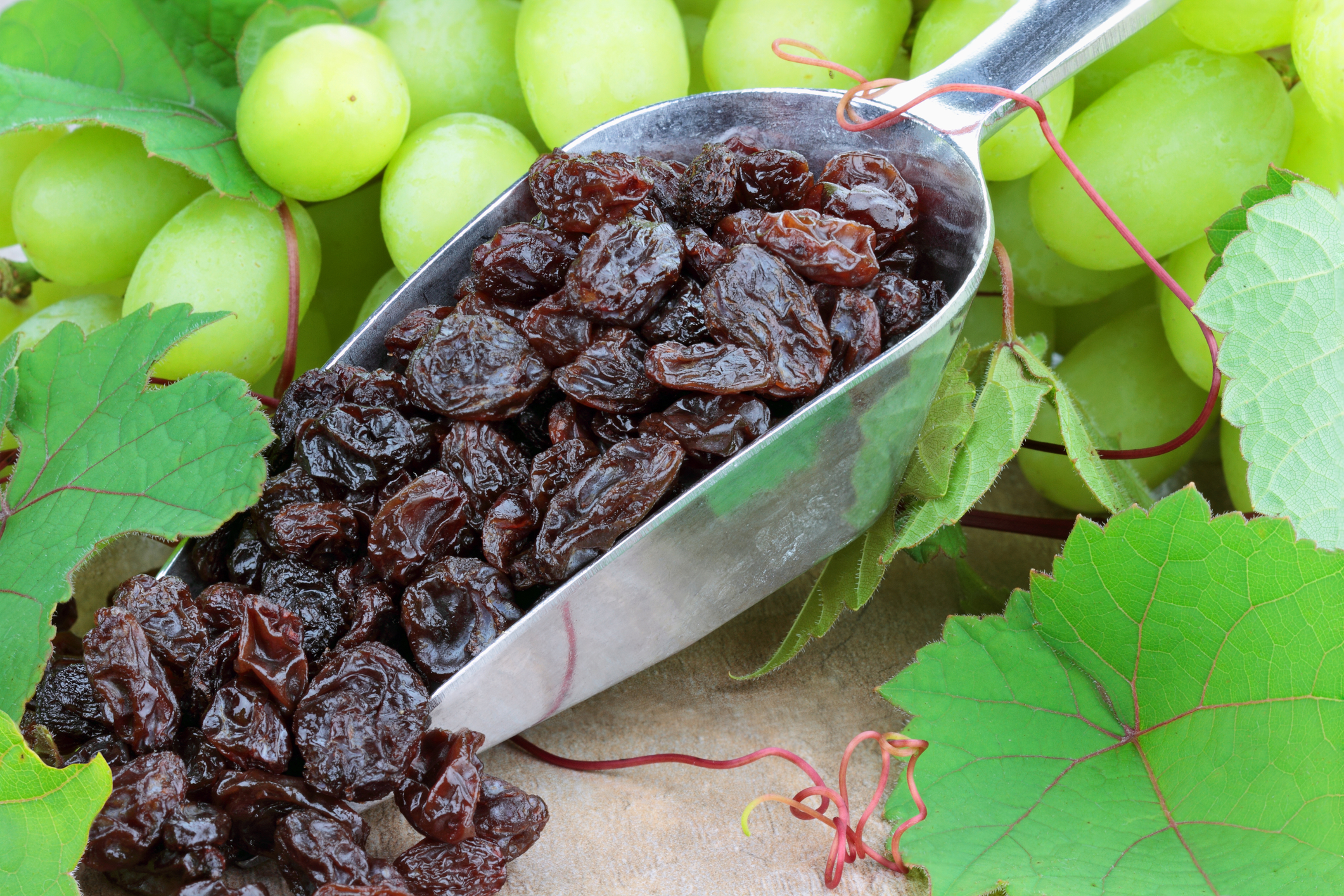
Raisins are the most popular dried fruit in the U.S., beloved as a naturally sweet treat that’s also rich in important nutrients.
The folklore
Grapes have been dried into the tiny wrinkled gems we call raisins as early as 2,000 B.C. Raisins were not only revered as a delicious food, they were used as decor at feasts and religious ceremonies, they were used as currency, and the Romans even awarded them as prizes at sporting events.
The facts
Unlike most dried fruits, dried grapes are uniquely named raisins. Grapes and raisins share the scientific name, Vitus vinifera, though the shrunken, wrinkly pellets surrounding a sweet, chewy flesh are quite different from their plump and juicy fresh grape counterpart. Grape varieties such as Thompson seedless, Muscat, Sultana, and Malaga are the most popular to dehydrate, whether by sun or oven. A one-quarter cup serving of raisins deliv- ers six percent DV (Daily Value, based on 2,000 calories per day) of satisfying dietary fiber, nine percent DV of heart-healthy potassium, and a healthy dose of health protective antioxidants.
The findings
Raisins are rich in dietary fiber and plant compounds, which have been shown to be beneficial to health, including positive effects on the gut microbiota. According to research, daily intake of raisins can increase the prevalence of healthy bacteria in the gut which may have potential health benefits, such as reduced chronic inflammation (Nutrition Journal, 2019). Though raisins have a 60% sugar content, research still shows them to be a healthy snack that may reduce appetite and contribute to improved diet quality. A study published in Food & Nutrition Research found that raisin consumers had higher intakes of nutrients like potassium, magnesium, and dietary fiber, and lower intakes of sugar, saturated fat, and sodium, than non-consumers.
The finer points
Raisins are readily available year-round, both in bulk and packaged. Choose richly colored, moist raisins when you can hand select or see through the packaging. Store them in an airtight container, and refrigerate or freeze for the longest life — up to six months. Pour a little hot water over the raisins to “plump” them before use. Especially delicious in baked goods, like scones, quick breads, and muffins, raisins are easily tossed into hot or cold cereals, yogurts, and salads, in trail mix, or eaten straight out of the container.
(Environmental Nutrition is the award-winning independent newsletter written by nutrition experts dedicated to providing readers up-to-date, accurate information about health and nutrition in clear, concise English. For more information, visit www.environmentalnutrition.com.)
©2026 Belvoir Media Group, LLC. Distributed by Tribune Content Agency, LLC.








Comments